A Guide to Eco Friendly Cleaning Products, choosing the right cleaning products is about more than just a tidy home—it’s about creating a safe, healthy space for your family. Eco-friendly cleaning products are made from natural, non-toxic, and biodegradable ingredients, offering a powerful clean without the harsh chemicals found in many conventional cleaners. This simple switch can make your home a healthier place for everyone in it.
What Makes a Cleaning Product Eco-Friendly?
Have you ever thought about your home’s “diet”? Just like we choose whole foods over processed snacks for our bodies, the same logic applies to our cleaning routines. Eco-friendly cleaning products are the healthy, whole-food equivalent for your home. Conventional cleaners, on the other hand, often act like junk food—full of artificial additives that can do more harm than good.
But what really separates a green cleaner from a traditional one? It’s about more than just a green leaf on the label. True eco-friendly products are defined by a core philosophy centered on health, safety, and sustainability.
This philosophy is built on three key pillars:
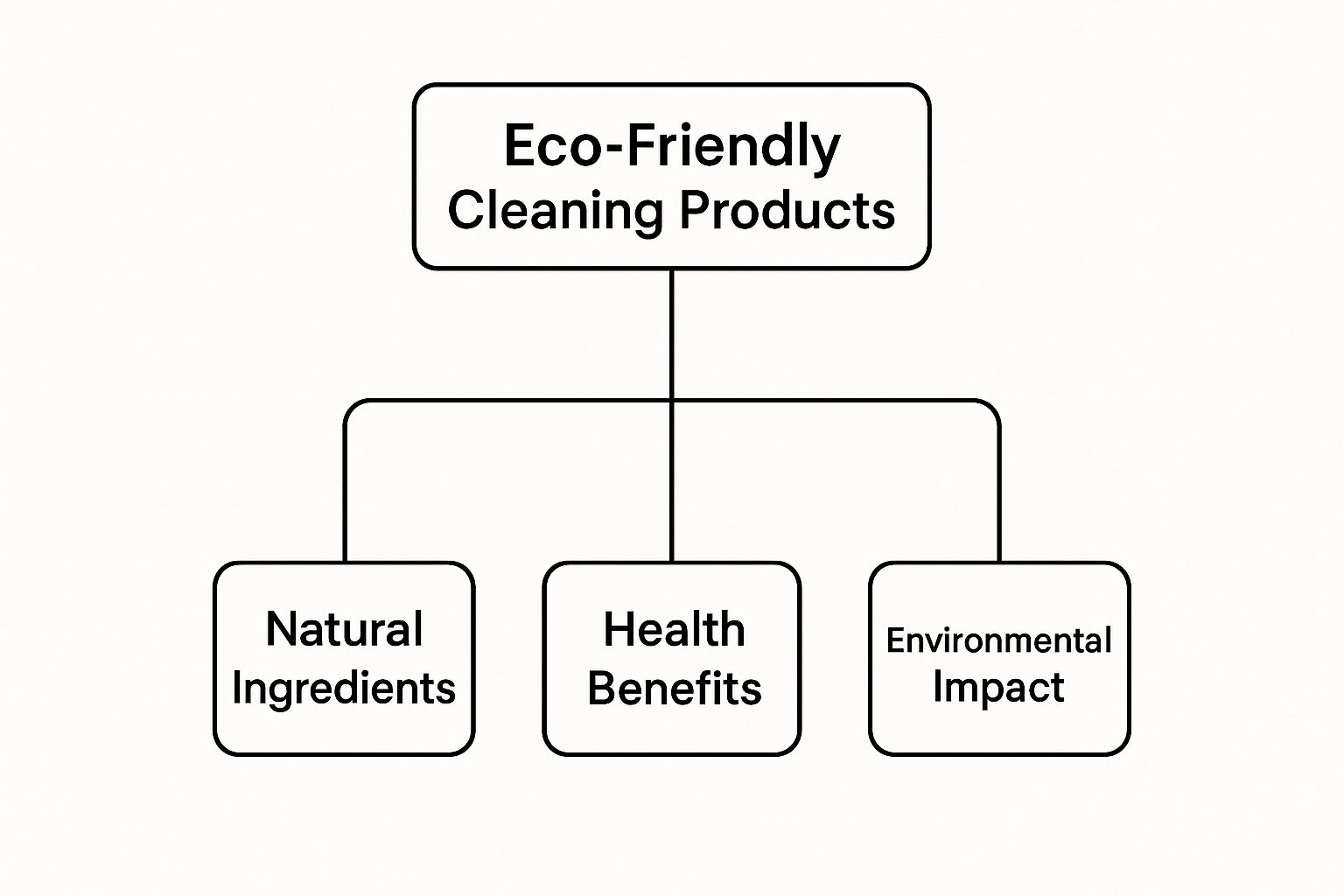
As you can see, the concept goes far beyond the ingredients list. It considers the product’s entire lifecycle and its real-world effect on your well-being.
The Problem with Conventional Cleaners
Many standard cleaning products on the market are packed with harsh, petroleum-based chemicals and synthetic fragrances. When you spray them, they release Volatile Organic Compounds (VOCs) into the air. These airborne particles can linger long after you’ve put the cleaning supplies away, contributing to indoor air pollution. It’s a startling fact, but the air inside our homes can sometimes be more polluted than the air outside.
This is a growing concern for many families. It’s no surprise the global market for natural household cleaners was valued at $6.97 billion and is expected to nearly double by 2030. People are becoming more aware of the health risks tied to chemical cleaners, which can include everything from respiratory issues to skin irritation. You can dig deeper into these market trends and their health implications on Grand View Research.
For a quick breakdown, here’s how the two types of cleaners stack up against each other.
Conventional vs Eco-Friendly Cleaners at a Glance
| Feature | Conventional Cleaners | Eco-Friendly Cleaners |
|---|---|---|
| Ingredients | Petroleum-based, synthetic chemicals | Plant-derived, natural ingredients |
| Toxicity | Often contain toxins like ammonia, bleach, phthalates | Non-toxic, free of harsh chemicals |
| Air Quality | Release VOCs, contributing to indoor pollution | No or low VOCs, improving air quality |
| Environmental Impact | Can persist in water systems and harm aquatic life | Biodegradable, breaking down naturally |
| Health Impact | Can cause skin irritation, allergies, respiratory issues | Safer for children, pets, and allergy-sufferers |
| Packaging | Often single-use plastic, less focus on sustainability | Prioritizes recycled, recyclable, or refillable packaging |
This table gives a clear picture of why making the switch is more than just a trend—it’s a move toward a healthier home.
Core Characteristics of Green Cleaners
So, what should you actually look for when you’re at the store? True eco-friendly products share a few common traits that set them apart. Getting familiar with these characteristics is the first step toward making smarter, healthier choices for your family.
Here are the defining features of genuinely green cleaning solutions:
- Plant-Derived Ingredients: Instead of synthetic chemicals, these products get their power from nature. Think of things like citric acid from lemons to cut through grease or plant-based surfactants (the stuff that makes soap sudsy) derived from coconuts.
- Biodegradable Formulas: This is a big one. It means that once the product goes down the drain, microorganisms can break it down into natural elements. It won’t stick around in the environment or harm aquatic life, which is a major problem with the phosphate-heavy formulas in many conventional cleaners.
- Non-Toxic and Safe for Families: The whole point of green cleaning is to create a safe home environment. These products steer clear of known toxins like ammonia, chlorine bleach, and phthalates, making them a much better choice for households with children, pets, or anyone with allergies.
At NeatBee, our commitment to a healthy home is at the core of everything we do. That’s why we champion the use of effective, eco-friendly options in our services, ensuring a space that’s not just clean, but genuinely safe for your loved ones. We believe that Care in Every Detail extends to the products we choose.
The True Benefits of Switching to Green Cleaning
Making the switch to eco friendly cleaning products is about so much more than just being “good for the planet.” While the environmental perks are huge, the benefits you’ll notice first usually start right inside your own home. When you choose green cleaning solutions, you’re creating a healthier, safer space for everyone you share it with.
The positive effects ripple outward, touching everything from your family’s well-being and the longevity of your furniture to the health of the local ecosystem. Let’s dig into the real-world impact you can expect when you go green with your cleaning routine.
A Healthier Home for Your Family and Pets
One of the biggest wins when going green is the immediate improvement in your home’s indoor air quality. Think about that harsh chemical smell from conventional cleaners—those are compounds that can linger in the air, triggering anything from headaches to breathing issues. This is a massive concern for families with kids, pets, or anyone with asthma or allergies.
Eco-friendly products simply don’t rely on those aggressive ingredients. This means:
- Fewer Allergens: Natural, plant-based formulas are far less likely to cause skin irritation or flare-ups.
- Better Air to Breathe: By ditching VOCs (volatile organic compounds), you create a home where everyone can breathe a little easier. This is especially critical for developing lungs and sensitive pets.
- Peace of Mind: You can clean up a spill on the floor without worrying about toxic residue being left behind where little hands and paws will inevitably end up.
“A clean home should never come at the expense of a healthy one. Switching to non-toxic, eco-friendly products is a powerful step toward creating a sanctuary where your family can thrive, free from unnecessary chemical exposure.”
Protecting Your Home’s Surfaces
Think of harsh chemical cleaners like an aggressive treatment that, over time, can wear down the very surfaces you’re trying to protect. Bleach can eat away at grout, ammonia can strip the finish from hardwood floors, and abrasive powders can leave tiny scratches on your countertops and fixtures.
Gentle, plant-based ingredients work differently. They use natural acids and enzymes to lift away dirt and break down grime without causing collateral damage. This approach not only cleans effectively but also helps preserve the beauty and integrity of your home. Your wood furniture, stone countertops, and delicate tile will thank you for making the switch, saving you from costly repairs or replacements down the line. It’s a core principle that applies whether you’re doing a quick tidy-up or figuring out the difference between a deep cleaning vs a regular cleaning.
A Positive Impact Beyond Your Walls
The benefits of green cleaning stretch far beyond your front door. When you wash conventional cleaning chemicals down the drain, they end up in our waterways. Unfortunately, many of these substances aren’t fully filtered out by water treatment plants and can harm aquatic life and disrupt fragile ecosystems.
Eco-friendly products, on the other hand, are designed to be biodegradable. This means they break down naturally into harmless components, leaving a much lighter footprint on the environment. Every time you choose a green cleaner, you’re making a conscious decision to protect local rivers, lakes, and oceans. It’s a small action with a significant positive ripple effect, proving that your choices at home truly matter on a larger scale.
How to Decode Labels and Avoid Greenwashing
Walking down the cleaning aisle can feel like a pop quiz you didn’t study for. Brightly colored bottles scream claims like “natural,” “green,” and “eco-friendly,” but what does any of that really mean? Unfortunately, this marketing tactic is called greenwashing, and it’s when companies use misleading language to make their products seem more environmentally friendly than they are.
But don’t worry—you don’t need a science degree to see through the hype. Learning to decode labels is your best defense, allowing you to make genuinely healthy choices for your home. It’s all about knowing what to look for and, just as importantly, what to avoid.
Look for Trustworthy Certifications
The simplest way to cut through the noise is to look for third-party certifications. Think of these logos as a seal of approval from independent watchdogs that have put the product through rigorous testing against strict health and environmental standards. They do the homework for you.
Here are a few of the most reputable seals to look for:
- EPA Safer Choice: This label from the U.S. Environmental Protection Agency means every ingredient has been reviewed for potential effects on human health and the environment. It’s a solid guarantee that the product is safer for your family, pets, and the planet.
- EWG Verified: The Environmental Working Group (EWG) has some of the toughest standards out there. The EWG VERIFIED™ mark means the product avoids all of EWG’s chemicals of concern and discloses every ingredient.
- Leaping Bunny Certified: If animal welfare is a top priority for you, this is the logo to find. It’s the gold standard for cruelty-free products, guaranteeing that no animal testing was used at any stage of development.
As more people hunt for green cleaning products, certifications are becoming a crucial tool for anyone trying to avoid sketchy chemicals. To dive deeper into this trend, you can explore detailed market insights on 360iResearch.
Spotting Common Greenwashing Claims
Marketers are clever. They use earthy images and feel-good words to create an illusion of “green.” But once you know their tricks, they’re easy to spot.
The key to avoiding greenwashing is to focus on proof, not promises. Vague terms like “earth-friendly” mean very little without a certification or a transparent ingredient list to back them up.
To help you out, here’s a quick guide to some common marketing claims and what they really mean.
Common Greenwashing Claims vs Reality
| Greenwashing Claim | What It Often Means | What to Look For Instead |
|---|---|---|
| “Natural” | This term is completely unregulated. It could mean the product contains one plant-derived ingredient alongside a dozen synthetic ones. | A full ingredient list with recognizable, plant-based sources. Look for terms like “plant-derived” or “plant-based.” |
| “Eco-Friendly” / “Green” | These are vague, general claims with no standard definition. A company can slap this on a label without any proof to support it. | Specifics. Does the label mention biodegradable ingredients, recycled packaging, or a recognized certification? |
| “Chemical-Free” | This is scientifically impossible—everything, including water, is a chemical. It’s a misleading term used to play on fears. | Look for phrases like “free of harsh chemicals,” “no chlorine bleach,” or “ammonia-free.” This is much more specific and meaningful. |
Red Flag Ingredients to Avoid
Just as important as knowing what to look for is knowing what to avoid. A quick scan of the ingredient list can tell you everything. If you see these on the label, it’s best to put the bottle back on the shelf.
Here is a list of common culprits found in conventional cleaners:
- Phthalates: Often hidden under the generic term “fragrance,” these chemicals are used to make scents last longer. They’re known endocrine disruptors and are linked to various health issues. Opt for products scented with essential oils or those that are fragrance-free.
- Ammonia: A staple in glass cleaners, ammonia is a powerful irritant that can trigger respiratory problems like asthma. A simple mix of vinegar and water works just as well without the harsh fumes.
- Chlorine Bleach (Sodium Hypochlorite): This is a highly corrosive chemical. Worse, when mixed with other cleaners (especially ammonia), it can create toxic chlorine gas. Green cleaners use gentler alternatives like hydrogen peroxide for whitening and disinfecting.
- Quaternary Ammonium Compounds (QUATs): Found in many disinfectant sprays and fabric softeners, QUATs can irritate the skin and are suspected of contributing to the problem of antibiotic-resistant bacteria.
Making informed choices is a cornerstone of our Community Focus value at NeatBee. We believe empowering you with knowledge is the first step toward a healthier home. By learning to read labels, you can confidently choose eco friendly cleaning products that truly align with your family’s well-being.
Your Simple DIY Green Cleaning Toolkit
Ready to roll up your sleeves and try making your own eco friendly cleaning products? You might be surprised to learn that some of the most powerful cleaners aren’t on a store shelf—they’re probably already in your pantry. Making the switch to DIY solutions is a fantastic way to control exactly what’s in your products, save money, and cut down on packaging waste.
You don’t need a complicated chemistry set to get started. In fact, most homemade recipes revolve around a core group of simple, effective, and safe ingredients. Our team calls them the ‘Fantastic Four’ of green cleaning, and they can tackle nearly any mess you throw at them.
The Fantastic Four of DIY Cleaning
Understanding why these ingredients work is the key to using them effectively. It’s not magic; it’s just simple science.
- White Vinegar: This acidic powerhouse is brilliant at dissolving mineral deposits (like limescale on your faucets), cutting through greasy films, and acting as a natural disinfectant. Think of it as the muscle that breaks down tough grime.
- Baking Soda (Sodium Bicarbonate): As a mild alkali, baking soda is a gentle abrasive perfect for scrubbing without scratching. It also excels at neutralizing acidic odors, making it a go-to deodorizer for refrigerators and drains.
- Castile Soap: This versatile, plant-based soap is a surfactant, which is a fancy way of saying it grabs onto dirt and oil, allowing them to be washed away with water. It’s gentle enough for dishes but strong enough for floors.
- Lemon Juice: Just like vinegar, lemon juice is acidic (thanks to citric acid) and works wonders on grease and stains. As an added bonus, it has natural bleaching properties and leaves behind a fresh, clean scent.
Safety First: A critical rule in DIY cleaning is to never mix vinegar with chlorine bleach, as it creates toxic chlorine gas. Also, avoid using acidic cleaners like vinegar and lemon on natural stone surfaces like marble or granite, as they can cause permanent damage.
Simple and Effective DIY Recipes
With these four ingredients, you can whip up cleaners for almost every surface in your home. Here are three of our favorite multi-purpose recipes to get you started.
1. All-Purpose Surface Spray
This is the workhorse of any cleaning kit. It’s perfect for countertops, sinks (except stone!), and wiping down tables.
- Ingredients: 1 part white vinegar, 1 part water, and a lemon peel or a few sprigs of rosemary for scent (optional).
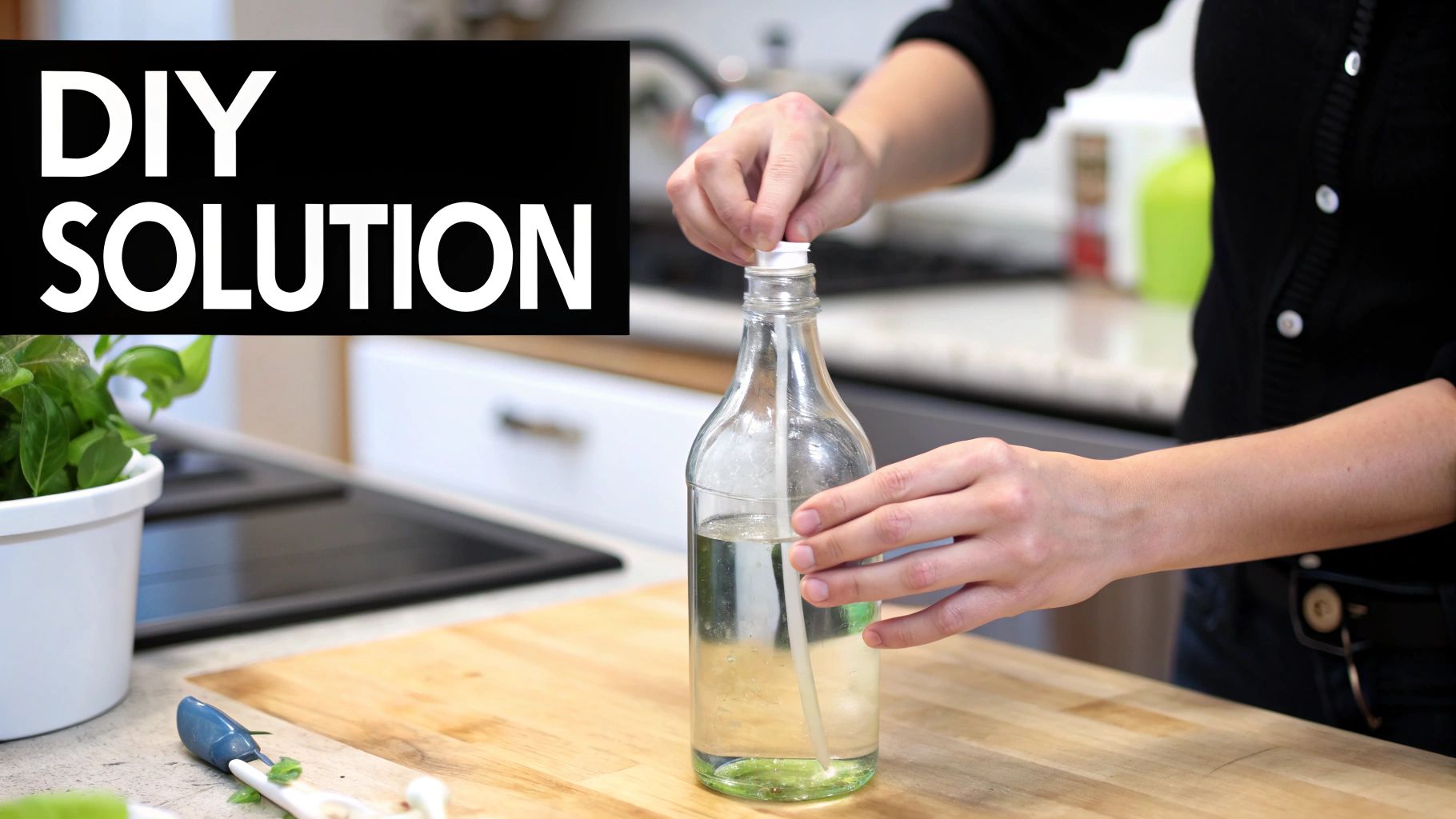
- Instructions: Just combine everything in a spray bottle and shake well. The vinegar cuts through grease and disinfects, while the water dilutes it to a safe level for most surfaces.
2. Gentle Scrubbing Paste
For tougher jobs like soap scum in the shower or a grimy stovetop, this paste provides scrubbing power without harsh chemicals.
- Ingredients: 1/2 cup baking soda and enough castile soap to form a thick paste (start with 2-3 tablespoons).
- Instructions: Mix the ingredients in a small bowl until it reaches a frosting-like consistency. Apply it with a sponge, scrub, and rinse thoroughly. The baking soda acts as a soft abrasive to lift stains.
3. Streak-Free Glass and Mirror Cleaner
Ditch that ammonia-based blue spray for this simple alternative that leaves a brilliant, streak-free shine.
- Ingredients: 1 cup distilled water, 1/4 cup white vinegar, and 2 tablespoons of rubbing alcohol (optional, for quick drying).
- Instructions: Pour all ingredients into a spray bottle and shake gently. Spray onto glass and wipe clean with a microfiber cloth for the best results.
These simple recipes can form the backbone of a robust cleaning routine. If you’re tackling a bigger project, see how these DIY solutions fit into our comprehensive deep cleaning checklist step-by-step guide for a whole-home refresh.
Making Green Cleaning a Part of Your Busy Life
Switching to eco friendly cleaning products is a great goal, but life gets busy. The good news is that going green doesn’t have to be a complicated overhaul. The secret is to weave small, sustainable habits into the schedule you already have.
At NeatBee, we train our team in these exact practices because we believe a healthy, clean home should be accessible to everyone. Consumer awareness about sustainability is growing, leading more people to seek safer options that reduce indoor air pollution. You can explore more about this growing consumer trend on DataIntelo.
Create Your Green Cleaning Caddy
One of the simplest, most effective changes you can make is to create a single, portable ‘green cleaning caddy.’ Just grab a small bucket or basket and fill it with your go-to essentials:
- Your favorite all-purpose spray (store-bought or DIY)
- A bottle of castile soap
- A shaker of baking soda for scrubbing power
- A few microfiber cloths
- An old toothbrush for tight corners
By keeping all your tools in one spot, you get rid of the annoying hunt for supplies. When a mess happens, you just grab the caddy and go. It makes cleanup faster and feel like much less of a production.
Adopt a Clean-As-You-Go Mindset
The real secret to a consistently clean home isn’t spending your entire Saturday scrubbing. It’s about tackling small messes before they become big ones. Wiping down the kitchen counter with your vinegar spray right after making dinner takes only 30 seconds but prevents grime buildup.
This simple habit means you won’t need those heavy-duty chemical cleaners later on. These tiny actions add up, maintaining a baseline of clean that makes bigger cleaning sessions much easier and saves you time and effort in the long run.
Debunking the Time Myth
There’s a common myth that green cleaning takes longer, but modern eco friendly cleaning products are incredibly efficient. Plant-based formulas are designed to work fast, cutting through grease and dirt without needing to soak. Plus, when you’re using gentle cleaners, you can spray and wipe with confidence, knowing you’re not damaging your surfaces.
If your schedule is just too packed, you can always lean on our professional home cleaning services to maintain a healthy home without adding to your workload. Our team uses effective, eco-friendly methods to give you back your valuable time.
Common Questions About Eco-Friendly Cleaning
Making the switch to a greener routine is a big step, and it’s normal to have questions. You might wonder if eco-friendly cleaning products can really stand up to the messes of a busy home. We hear these questions all the time, and our team is here to give you clear, straightforward answers.
Are Eco-Friendly Cleaners as Effective as Chemical Ones?
Yes, absolutely! Today’s formulas are a completely different story from early green cleaners. Modern eco-friendly cleaning products are powered by advanced plant-based science that is incredibly effective at breaking down grease, grime, and bacteria without harming your home or your health.
Unlike harsh chemicals that use brute force, green cleaners work smarter. They use ingredients like natural enzymes and citric acid to target dirt effectively. For all your everyday cleaning challenges, from sticky countertops to grimy floors, they are more than powerful enough to get the job done right.
Does Switching to Green Cleaning Cost More Money?
It’s a common myth that going green will hurt your wallet, but it often saves you money. Many store-bought green cleaners are sold in concentrated formulas, so a single bottle lasts much longer. Refillable cleaning systems also cut costs, as you stop paying for new plastic packaging every time.
And if you explore the DIY route with household staples like vinegar and baking soda, your cleaning expenses can drop dramatically. When you factor in the long-term value—like protecting your family’s health and preventing damage to your home’s surfaces—the financial benefits become even clearer.
Where Can I Find Trustworthy Eco-Friendly Products?
Finding great green products has never been easier. Most major grocery stores now have dedicated “eco-friendly” sections in their cleaning aisles. You can also find excellent selections at health food stores and online retailers.
The most important tip is to put your label-reading skills to use. Don’t just trust the pretty green leaf on the front. Instead, flip the bottle over and look for third-party certifications like EPA Safer Choice or EWG Verified. These seals guarantee a product is genuinely safe and effective. If you have more questions about our specific product choices, check out our NeatBee FAQ page for more details.
What Is the Best First Step to Start Green Cleaning?
Feeling overwhelmed? Don’t be. The journey to a greener home doesn’t have to happen all at once. If you’re looking for the single most impactful first step, it’s this: replace your all-purpose spray cleaner.
This is the product you likely use most often on countertops, tables, and other high-touch surfaces. Swapping just this one bottle can dramatically reduce your family’s daily exposure to airborne chemicals and VOCs.
This simple change builds momentum and makes a significant difference right away. You can either purchase a certified eco-friendly spray or mix your own with vinegar and water. Taking this one small, manageable step is the perfect way to begin your green cleaning journey with confidence.
Ready for a home that’s not just clean, but healthy too? Let the experts at NeatBee Cleaning handle the details. We use effective, eco-friendly products and practices to give you a spotless home and complete peace of mind. Book your cleaning today