Eco friendly house cleaning is all about keeping your home sparkling using products and methods that are safe for your family, your pets, and the planet. It’s a simple but powerful shift away from harsh, synthetic chemicals toward effective, natural alternatives.
The goal? To create a living space that isn’t just tidy, but truly healthy. This small change protects your loved ones from unnecessary toxins and shrinks your environmental footprint at the same time.
What Does Eco Friendly House Cleaning Really Mean?
At its heart, eco friendly house cleaning is about making conscious choices. It means letting go of the old idea that “clean” has to smell like bleach or ammonia. Instead, you’re embracing solutions that won’t compromise your indoor air quality or harm the world outside your door.
This approach boils down to two key things: the products you use and the methods you follow. Rather than grabbing conventional cleaners loaded with volatile organic compounds (VOCs), you’ll find yourself reaching for plant-based ingredients or even simple pantry staples like vinegar and baking soda. And this isn’t just a fleeting trend—it’s a massive movement toward healthier living.
A Growing Movement Toward Healthier Homes
The demand for green cleaning products speaks for itself. The global market was valued at around $25 billion in 2023 and is expected to nearly double to an incredible $45 billion by 2032. That explosion in growth is being driven by families just like yours who are becoming more aware of what’s really inside those traditional chemical cleaners. You can dig deeper into the growth of the eco-friendly cleaner market at dataintelo.com.
So, what does this look like day-to-day? It’s less about complexity and more about making smart, simple swaps.
- Prioritizing Safety: You’re choosing products that won’t irritate skin, trigger allergies, or cause respiratory issues for your kids and pets.
- Reducing Waste: Think reusable microfiber cloths instead of single-use wipes, and concentrated refills to cut down on plastic packaging.
- Protecting Waterways: You’re using biodegradable ingredients that break down harmlessly, keeping toxic chemicals out of our rivers and oceans.
A truly clean home shouldn’t come at the cost of your health or the environment. Eco-friendly cleaning proves that you can achieve a brilliant shine and a safe sanctuary at the same time.
By embracing eco friendly house cleaning, you’re doing more than just tidying up. You’re actively creating a safer, more nurturing environment for your family to thrive in. It’s a commitment to well-being that starts right at home.
The Real Benefits of Going Green with Your Cleaning
Choosing eco friendly house cleaning isn’t just about being kind to the planet—it’s about making a tangible, positive change that you’ll feel every single day. The advantages go far beyond just a sparkling home; they create a healthier, safer, and more sustainable environment for the people (and pets) you care about most.
When you switch to green cleaning methods, you’re not giving up an ounce of effectiveness. You’re simply choosing a smarter, gentler way to get those same brilliant results. Let’s dive into the three key areas where you’ll see the biggest impact.
A Healthier Home for Your Family and Pets
The most immediate benefit of going green is a dramatic improvement in your home’s air quality. Traditional cleaners often release volatile organic compounds (VOCs), sneaky chemicals that can linger in the air long after you’ve put the spray bottle away. Ever get a headache after a big cleaning session? That’s your body reacting to those VOCs.
By choosing products with plant-based ingredients, you cut out these airborne irritants entirely. This is a huge deal for households with young children, elderly family members, or furry friends, since their smaller bodies are much more sensitive to harsh chemicals. A greener routine means everyone can breathe a little easier.
The health risks are real and well-documented. Shockingly, studies have shown that long-term exposure to the chemicals in many common cleaning products can damage lung health as severely as smoking 20 cigarettes a day. This startling fact alone makes a powerful case for choosing safer, organic alternatives. You can discover more about the market shift toward safer products at GrandViewResearch.com.
Protecting Your Home’s Surfaces
Have you ever noticed how harsh chemicals can dull, etch, or even discolor your beautiful countertops, floors, or furniture over time? Aggressive cleaners can strip away protective finishes and cause long-term damage, leading to costly repairs or replacements down the road. It’s like using a harsh detergent on a delicate silk shirt—it might get the stain out, but it also weakens the fabric.
Eco-friendly alternatives work differently. They are formulated to be tough on grime but incredibly gentle on your home’s surfaces.
- Wood Floors: Natural, pH-neutral cleaners lift dirt without stripping the wood’s protective sealant, which keeps that natural shine alive.
- Stone Countertops: Gentle, plant-based soaps clean effectively without the risk of etching, which is why acidic cleaners like vinegar are a no-go on surfaces like marble.
- Fixtures: Non-abrasive solutions prevent scratching on chrome and stainless steel, keeping them looking new for much longer.
Using gentle ingredients is really an investment in your home’s longevity, ensuring your surfaces stay beautiful for years to come.
“A home cleaned with care is a home that lasts. Choosing gentle, effective products protects not just your family’s health, but the very surfaces you live on every day.”
A Lighter Footprint on the Environment
Finally, every time you choose an eco-friendly cleaner, you’re making a positive choice for the planet. When conventional products get washed down the drain, they introduce a cocktail of harmful chemicals into our waterways. These pollutants can harm aquatic life and disrupt entire ecosystems.
In contrast, green cleaners are made with biodegradable ingredients that break down naturally and harmlessly. On top of that, many eco-conscious brands are prioritizing sustainable packaging, using recycled materials and offering concentrated refills to slash plastic waste. Our team is passionate about finding solutions that work, which is why we value options like our eco-friendly cleaning products that you can feel good about using in your home.
How to Choose Genuinely Green Cleaning Products
Stepping into the cleaning aisle can feel overwhelming. With countless bottles shouting “natural,” “green,” and “eco-friendly,” how can you tell which ones are genuinely better for your family and home?
The truth is, many of these terms are unregulated marketing buzzwords. This tactic is called greenwashing, and it’s designed to make you feel like you’re making a healthy choice, even when a product is full of questionable ingredients. Learning to see past the hype is the first step toward a truly eco friendly house cleaning routine.
Decoding Labels and Spotting Fakes
To cut through the noise, you need to become a bit of a label detective. Vague, feel-good claims are your first red flag. If a bottle just says “earth-friendly” without any proof, it’s best to be skeptical.
Instead, look for official, third-party certifications. These logos act as a seal of approval, guaranteeing that an independent organization has verified the product’s claims about its safety and ingredients.
- EPA Safer Choice: This label from the U.S. Environmental Protection Agency means the product’s ingredients are safer for human health and the environment without sacrificing performance.
- EWG Verified: The Environmental Working Group’s mark shows the product avoids ingredients of concern, provides full transparency, and follows good manufacturing practices.
- Leaping Bunny Certified: This is the gold standard for cruelty-free products, ensuring no animal testing was used in any phase of product development.
Spotting these logos lets you shop with confidence. For a deeper look at what makes certain products stand out, check out our guide to the best eco-friendly cleaning products on the market today.
Spotting Greenwashing vs. Real Eco-Certifications
This comparison helps you tell the difference between vague marketing claims and the regulated certifications that actually mean something for your family’s health.
| Greenwashing Claim (Unregulated) | What It Might Mean | Legitimate Certification (Regulated) | What It Guarantees |
|---|---|---|---|
| “All-Natural” or “Natural” | Could contain naturally occurring toxins like arsenic or formaldehyde. The term isn’t regulated. | USDA Certified Organic | The product contains at least 95% organic ingredients, with strict rules on processing and handling. |
| “Eco-Friendly” or “Green” | A completely undefined term. It could mean anything from the bottle being recyclable to one minor ingredient being plant-based. | EPA Safer Choice | Every ingredient has been reviewed by EPA scientists for potential health and environmental effects. |
| “Non-Toxic” | There is no official definition. A product could be non-toxic to humans but harmful to aquatic life, or vice-versa. | EWG Verified | The product avoids the Environmental Working Group’s extensive list of “unacceptable” ingredients linked to health concerns. |
| “Cruelty-Free” (with no logo) | A company can claim this without third-party verification, potentially still using ingredients tested on animals by suppliers. | Leaping Bunny Certified | Guarantees no new animal testing occurred at any stage of product development by the company, its labs, or its suppliers. |
Ultimately, regulated certifications take the guesswork out of your shopping. They provide a clear, trustworthy shortcut to products that genuinely align with a healthier, safer home.
Key Ingredients in Effective Green Cleaners
So, what are the good guys? The most effective store-bought green cleaners are powered by simple, plant-derived ingredients that have been trusted for generations. These workhorses prove you don’t need harsh chemicals to get a truly deep clean.
Choosing green products isn’t just about avoiding the bad stuff; it’s about embracing the powerful, natural ingredients that get the job done safely and effectively. Your home deserves a clean that feels as good as it looks.
Common plant-based powerhouses include:
- Thymol: Derived from the thyme plant, this is a natural disinfectant that can kill household germs.
- Citric Acid: Found in citrus fruits, it’s excellent for cutting through soap scum and mineral deposits on sinks and showers.
- Decyl Glucoside: A gentle, plant-based surfactant (the stuff that makes soap sudsy) that lifts dirt and grime without harsh chemicals.
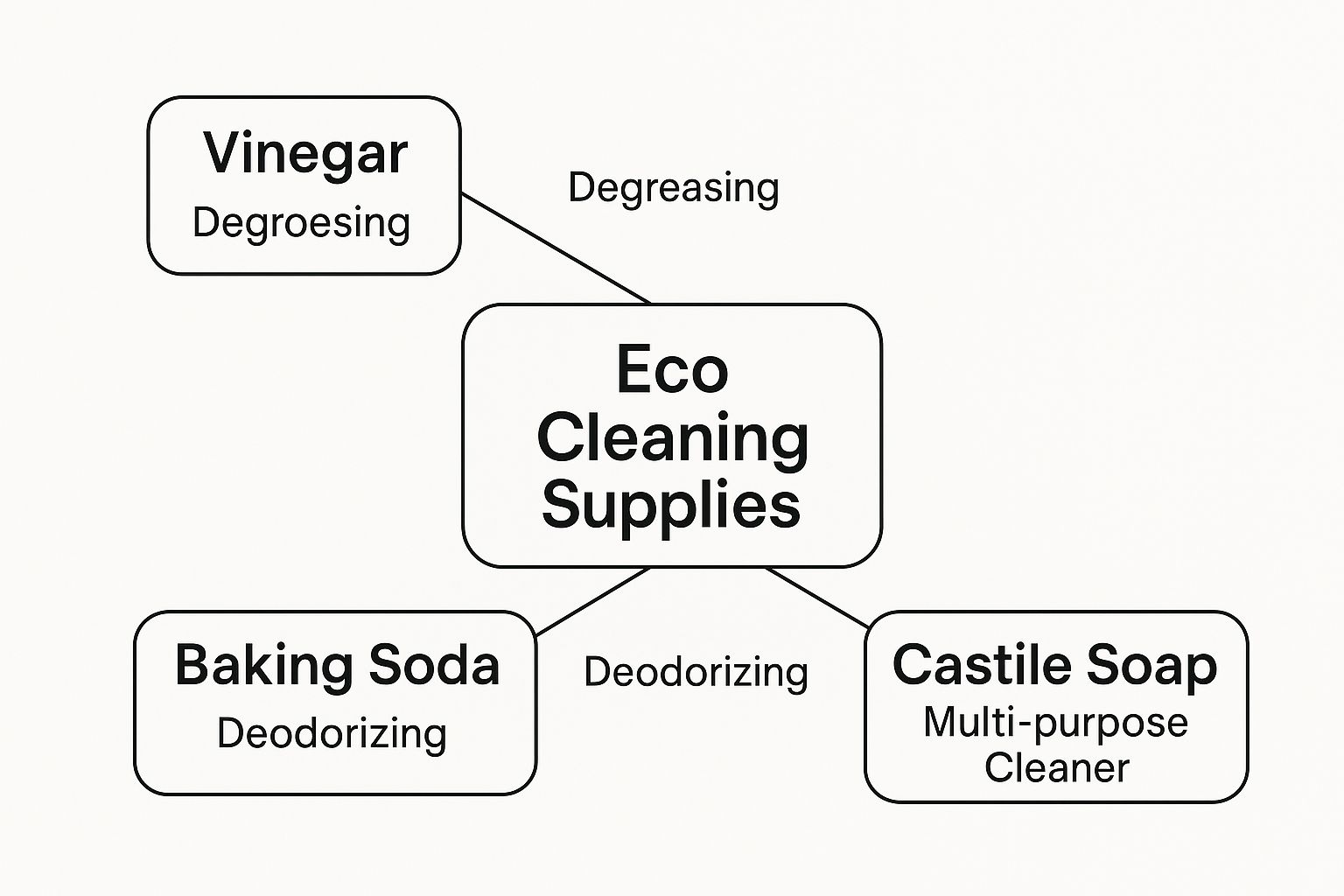
As you can see, a few simple, versatile ingredients can tackle the majority of cleaning tasks in your home, from degreasing kitchen counters to deodorizing the bathroom.
The Rise of Multifunctional Green Products
As more families switch to greener options, manufacturers are taking note. We’re seeing a fantastic trend toward versatile, multifunctional products—like all-in-one sprays and cleaning concentrates—that combine cleaning, sanitizing, and deodorizing into a single step.
Thankfully, companies are focusing on developing eco-friendly, biodegradable, and plant-based formulas for these convenient solutions. This shift makes it easier than ever for busy families to maintain a spotless home without a cabinet overflowing with different chemical-based cleaners.
Building Your DIY Natural Cleaning Toolkit
You don’t need a cabinet overflowing with expensive, specialized products to get a powerful, green clean. The secret to effective and affordable eco friendly house cleaning is probably hiding in plain sight—right in your kitchen pantry.
Building your own DIY toolkit is all about getting back to basics. It lets you create potent, effective cleaners using simple, safe, and incredibly inexpensive ingredients. Instead of relying on complex chemical formulas you can’t pronounce, you’ll be harnessing the natural cleaning power of everyday items. It’s a rewarding way to take full control over what you bring into your home.
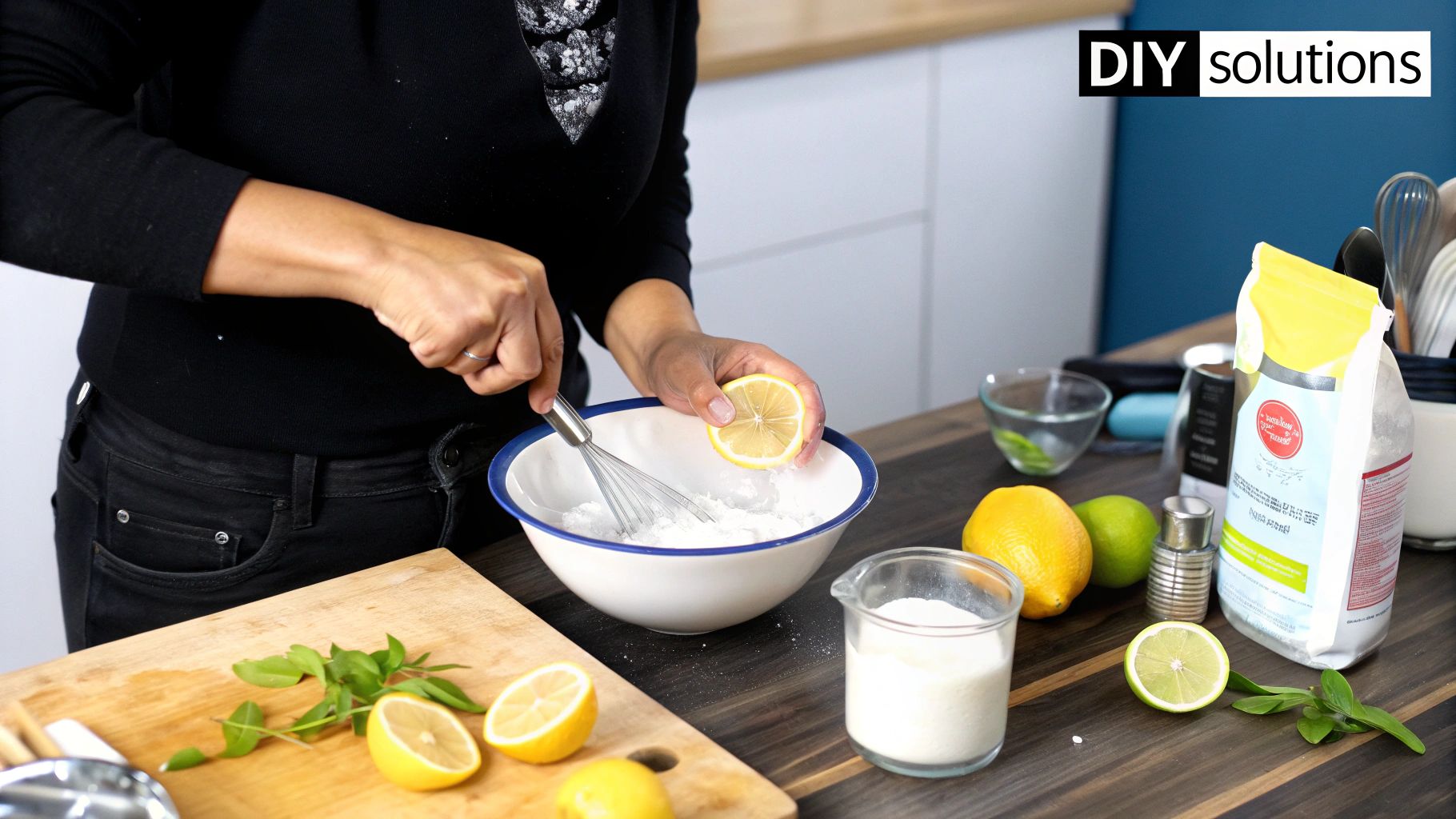
Meet Your Pantry Power Players
Think of these ingredients as the superheroes of your natural cleaning arsenal. Each one has unique properties that make it a formidable foe against dirt, grease, and grime—all without the harsh side effects of conventional chemicals.
Here are the essential staples for your toolkit:
- Distilled White Vinegar: Its acidic nature makes it a fantastic natural disinfectant and degreaser. It effortlessly cuts through soap scum, dissolves hard water stains, and leaves surfaces sparkling.
- Baking Soda: A gentle abrasive and a natural deodorizer, baking soda is perfect for scrubbing surfaces without scratching them. It lifts stains and absorbs unpleasant odors.
- Lemon Juice: It’s way more than just a fresh scent! The citric acid in lemon juice is a natural bleaching agent and disinfectant, great for tackling grease.
- Castile Soap: This versatile, vegetable-based soap is gentle yet effective. It’s a fantastic base for all-purpose cleaners, floor solutions, and even dish soap.
By combining these simple ingredients, you can create a customized cleaning solution for nearly every task in your home. It’s the ultimate way to simplify your routine and reduce your reliance on single-use plastic bottles.
Simple DIY Cleaning Recipes
Ready to get started? These tried-and-true recipes are incredibly easy to make. For a comprehensive list, you can explore our guide to other effective non-toxic cleaning solutions.
A couple of quick tips: always remember to label your DIY creations clearly and store them in a cool, dark place. And a quick patch test on an inconspicuous area is always a smart first step before cleaning a new surface.
1. All-Purpose Cleaning Spray
This is the workhorse of your DIY toolkit, perfect for countertops, shelves, and most hard surfaces. Just be sure to avoid using this vinegar-based spray on natural stone like marble or granite, as the acid can cause etching.
You’ll Need:
- 1 part distilled white vinegar
- 1 part water
- A few drops of lemon juice or 5-10 drops of your favorite essential oil (like tea tree or lavender for antibacterial properties)
Instructions:
- Pour all ingredients into a reusable spray bottle.
- Shake gently to combine.
- Spray onto surfaces and wipe clean with a microfiber cloth.
2. Streak-Free Glass and Mirror Cleaner
Say goodbye to frustrating streaks and chemical films on your windows and mirrors. This simple mix harnesses the power of vinegar to cut through grime, leaving behind nothing but a crystal-clear shine.
You’ll Need:
- 1 part distilled white vinegar
- 1 part water
Instructions:
- Combine the vinegar and water in a spray bottle.
- Spray directly onto the glass surface.
- Wipe away with a clean, lint-free microfiber cloth or a squeegee for a perfectly clear finish.
3. Tough Bathroom Scrub
For tackling soap scum, hard water buildup, and grime in your tub, shower, and sink, this paste is a game-changer. The baking soda provides the scrubbing power, while the castile soap helps lift and wash away the dirt.
You’ll Need:
- 1/2 cup baking soda
- 2-3 tablespoons of liquid castile soap
- A small amount of water
Instructions:
- In a small bowl, mix the baking soda and castile soap.
- Add just enough water to form a thick, spreadable paste.
- Apply the paste to the surface with a sponge or brush, scrub in a circular motion, and rinse thoroughly with water.
Your Room-by-Room Green Cleaning Game Plan
Alright, you’ve got your green cleaning toolkit ready to go. Now for the fun part: putting it all into action where it counts. An effective eco friendly house cleaning strategy isn’t about one massive, overwhelming scrub-down. It’s about breaking the job into manageable, room-by-room missions.
This is your practical game plan for tackling each area of your home with targeted, non-toxic methods. By focusing on one space at a time, you can get that top-to-bottom sparkle without the burnout.
Conquering the Kitchen
They say the kitchen is the heart of the home, which means it sees a ton of action—and messes. From greasy stovetops to sticky counters, this room demands cleaning power that’s both tough and safe. After all, harsh chemicals have no business being near your food.
Here’s how to make your kitchen shine, the natural way:
- Countertops and Surfaces: For most non-stone surfaces like laminate, that DIY all-purpose vinegar spray is your best friend. Just spritz the counter, let it sit for a minute to break down grime, and wipe it clean with a microfiber cloth.
- Greasy Stovetops: Mix up a paste with baking soda and a bit of water. Slather it onto greasy spots and let it sit for about 15 minutes. The gunk will loosen, allowing you to gently scrub it away with a non-abrasive sponge.
- Sinks and Drains: To get your sink sparkling, sprinkle it liberally with baking soda and then spray it with white vinegar. Let the fizzing action do the heavy lifting for a few minutes before you scrub and rinse. Got a funky garbage disposal? Just run a few lemon wedges through it.
If you’re wondering whether your kitchen needs a quick wipe-down or a full overhaul, check out our guide on the key differences between a deep cleaning vs a regular cleaning.
Brightening the Bathroom
Ah, the bathroom. It’s a magnet for soap scum, hard water stains, and mildew. Conventional cleaners usually hit these problems with a sledgehammer of bleach and ammonia, which can fill a small, enclosed space with some seriously nasty fumes. The good news is that green cleaning methods work just as well, without nuking your air quality.
Your bathroom can be both sparkling clean and a safe, fume-free environment. Natural ingredients like vinegar and baking soda easily cut through soap scum and mildew, proving you don’t need harsh chemicals for a hygienic space.
Here’s your bathroom action plan:
- Toilets: Toss baking soda into the toilet bowl, followed by about a cup of white vinegar. Let it bubble away for 10-15 minutes, then give it a good scrub with a toilet brush and flush.
- Showers and Tubs: For stubborn soap scum, spray the surfaces with undiluted white vinegar and let it sit for at least 30 minutes. Follow up by scrubbing with a paste of baking soda and castile soap to lift the grime, then rinse it all away.
- Mirrors and Glass: Your 50/50 vinegar and water spray is the perfect streak-free solution for mirrors and glass shower doors.
- Grout and Tiles: Mix baking soda and water into a thick paste. Apply it to the grout lines, let it sit for a few minutes, and then scrub with an old toothbrush to lift stains without scratching your tile.
Refreshing Living Areas and Bedrooms
These rooms are your sanctuaries for rest and relaxation, so the main goal here is to keep dust and allergens at bay. We’re aiming for a clean, serene environment that feels good to be in, and that’s where gentle methods and regular upkeep really shine.
Dust and allergens are the biggest offenders in these spaces. In fact, the Environmental Protection Agency warns that indoor air can be way more polluted than the air outside, making regular dusting and vacuuming essential for your health.
Simple Steps for Serene Spaces
- Dusting Done Right: Forget the feather duster—it just pushes dust into the air. Instead, grab a damp microfiber cloth to actually trap and remove dust from surfaces, shelves, and baseboards.
- Floor Care: For hardwood or laminate floors, a bucket of warm water with just a few drops of castile soap is all you need. To freshen up carpets, sprinkle them with baking soda, let it sit for 20-30 minutes to absorb odors, and then vacuum it all up.
- Upholstery and Fabrics: Whip up a simple fabric refresher by mixing water with a few drops of your favorite essential oil (lavender is great for this) in a spray bottle. A light mist over furniture and curtains leaves a calming, natural scent.
- Windows: Use that same vinegar and water glass cleaner on your interior windows to let as much natural light in as possible. A squeegee can help you get that professional, streak-free finish.
This room-by-room approach makes eco friendly house cleaning feel totally achievable. By consistently using these safe and simple methods, you’ll create a home that is a genuinely healthier place for your family to live and breathe.
When to Trust Professionals for a Deep Green Clean
DIY methods are fantastic for keeping your home fresh and tidy day-to-day. But let’s be honest, sometimes life gets in the way, or a cleaning challenge comes along that’s just too big to tackle alone. That’s when calling in a professional team for a deep, eco friendly house cleaning isn’t a luxury—it’s a smart solution.
Think of it like maintaining a car. You handle the regular washes, but for a major tune-up, you trust a certified mechanic. Our team acts as your green cleaning specialists, equipped with the expertise and professional-grade eco-products to restore your home’s sparkle.
Situations That Call for a Professional Touch
While your own efforts are perfect for weekly upkeep, certain events demand a level of cleanliness that goes far beyond the surface. Hiring a professional service isn’t just about getting the job done right; it’s about reclaiming your time and getting total peace of mind.
Here are a few times when it makes sense to call in the experts:
- Moving In or Out: A move-out clean ensures you leave the space pristine. On the flip side, a move-in clean guarantees your new home is sanitized and fresh before you even unpack a single box.
- Post-Renovation Cleanup: Construction is messy. It leaves behind a layer of fine dust that settles everywhere. Professionals have specialized equipment, like HEPA-filter vacuums, to safely and thoroughly remove it all.
- Seasonal Deep Cleaning: Think of a deep spring or fall clean as a total reset for your home. We tackle the often-neglected areas like baseboards, light fixtures, and behind heavy appliances. Check out our guide on the differences between deep cleaning vs regular cleaning.
- Preparing for a Special Event: Hosting a holiday party or a big family gathering? Let us handle the deep clean so you can focus on being the perfect host.
Trusting a professional service means investing in a comprehensive clean that truly renews your space. It’s about achieving a level of detail that restores freshness and hygiene to every last corner of your home.
The NeatBee Advantage: A Deeper, Greener Clean
When you choose a professional service like ours, you’re getting so much more than just a clean home. You get the benefit of a trained team that truly understands the science behind green cleaning. We use proven techniques and powerful, non-toxic products to deliver a meticulous clean you can see and feel.
Our team knows precisely how to handle different surfaces safely and effectively, from delicate hardwood floors to porous natural stone countertops. We bring the expertise to handle tough jobs efficiently, ensuring a consistent, high-quality result every single time. For busy families, this means reclaiming your weekends and coming home to a space that is both immaculate and genuinely healthy.
Your Eco-Friendly Cleaning Questions Answered
Making any kind of change in your routine is bound to bring up a few questions. Shifting to eco friendly house cleaning is a great move, but it’s totally normal to wonder about a few things before you dive in. We’ve put together some of the most common questions our team gets asked to give you clear, confident answers.
Do natural disinfectants actually work?
They absolutely do. While they don’t work in the same way as harsh chemicals like bleach, natural disinfectants are surprisingly effective. Ingredients like thymol (from thyme oil), citric acid (from lemons), and even a simple vinegar solution can kill a whole host of common household germs and bacteria. The real trick is giving them enough time to do their job—something pros call “dwell time.”
Does making your own cleaners really save money?
You bet it does. A big bottle of distilled white vinegar and a box of baking soda will only set you back a few dollars, but they can be used to make dozens of batches of all-purpose cleaner, glass spray, and scrubbing pastes. When you stack that up against buying multiple single-use plastic bottles of brand-name cleaners, the savings add up fast.
What’s the easiest way to get started?
The key is not to try and change everything at once. The best way to make a lasting switch is to start small.
- Pick one cleaner to swap out: A great first step is replacing your all-purpose spray with a simple DIY vinegar and water solution.
- Use up what you already have: As you run out of a conventional product, just replace it with a green alternative—either something you buy or something you make.
This slow-and-steady approach makes the transition to eco friendly house cleaning feel completely manageable and easy to stick with.
Ready to experience a deep, green clean without lifting a finger? The NeatBee Cleaning team is here to help. We combine professional expertise with a commitment to non-toxic products, giving you a home that’s both sparkling and safe.