Learning how to freshen carpet starts with understanding what you’re up against. Think of your carpet as a giant filter for your home—it traps and holds onto everything that floats through the air or gets tracked in on shoes. A quick pass with the vacuum isn’t enough to tackle the deep-down grime that causes lingering odors and makes your carpet look tired.
So, Why Does My Carpet Still Smell?
You’ve vacuumed twice this week, but there’s a stale odor you just can’t shake. Sound familiar? It’s not your imagination. The very design of carpet fibers makes them experts at trapping microscopic particles that create persistent smells and can even impact your home’s air quality.
Each fiber acts like a tiny magnet for dirt, dust, and pollutants. Over time, that buildup creates a cocktail of odors that your standard cleaning routine simply can’t handle on its own, leaving your home feeling less than fresh.
A Peek Inside Your Carpet Fibers
What’s really happening deep within your carpet is a whole ecosystem of trapped particles. We’re not just talking about the crumbs you can see on the surface; the real problem lies in what has settled all the way down into the carpet’s backing.
Here’s a breakdown of the usual suspects:
- Dust and Allergens: Everyday dust, pollen, and other airborne irritants get stuck in the fibers, which can lead to that stuffy smell and bother anyone with allergies.
- Pet Dander and Oils: Our pets leave more than just fur behind. Dander and the natural oils from their skin work their way deep into the carpet, creating that signature “pet smell” that’s so hard to kick.
- Spills and Hidden Moisture: Even a small spill that you think you’ve cleaned up can leave residue behind. Any lingering moisture creates the perfect environment for mildew to grow, which is the source of that classic musty odor.
- Tracked-In Grime: The dirt we bring in from outside isn’t just dirt; it’s loaded with organic matter and bacteria. As that material breaks down, it releases unpleasant smells throughout the room.
Getting a handle on the science behind carpet odors is the key to finally getting rid of them. This isn’t about covering up a smell with a spray; it’s about pulling the source out for good to create a genuinely clean and healthy space for your family.
This hidden buildup is exactly why a carpet can look perfectly clean but still not smell or feel fresh. Once you know what you’re dealing with, you can pick the right strategy for a lasting refresh. If pets are part of your odor challenge, our pet-friendly home cleaning guide has extra tips you might find helpful.
Quick DIY Methods for Instant Freshness
Sometimes you just need a quick refresh for your carpets, and a trip to your own pantry is often all it takes. You don’t always need harsh chemicals to get the job done; simple household staples can work wonders for a fast, non-toxic fix. This is especially true for busy households with kids and pets where little messes and smells are a part of daily life.
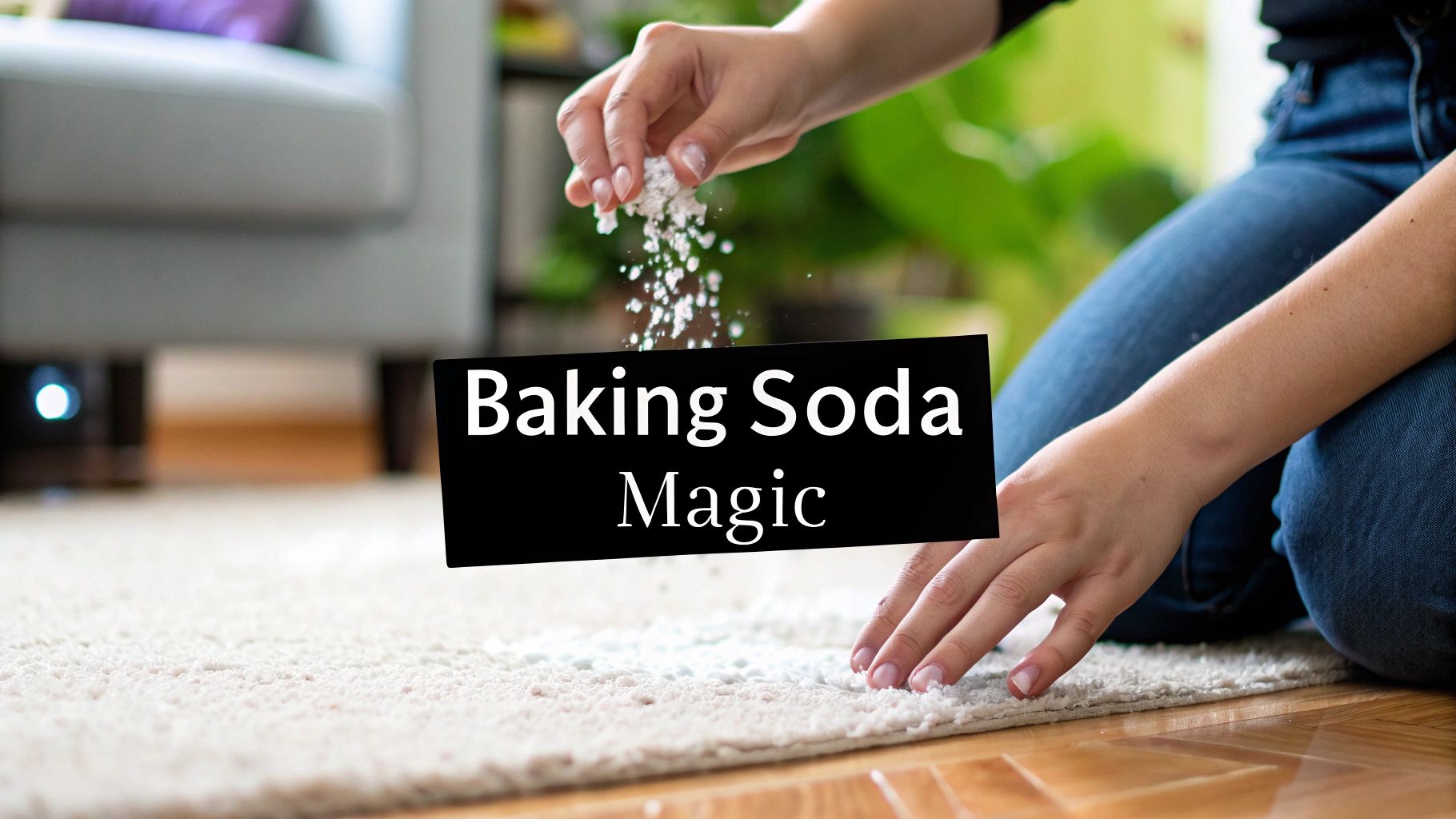
The undisputed champion of DIY carpet freshening? Good old baking soda. Its real magic is that it doesn’t just cover up odors—it actually absorbs and neutralizes them.
The Power of Baking Soda
Using baking soda is a classic for a reason—it works. The idea is simple: sprinkle, wait, and vacuum. It’s an effective, affordable, and safe way to tackle everyday mustiness and keep your home smelling clean.
Want to take it up a notch? Try these simple tips:
- Add a Fresh Scent: Before you sprinkle, mix the baking soda with 10-15 drops of a pet-safe essential oil. Lavender and chamomile are great choices. Just be sure to avoid oils that can be toxic to pets, like tea tree oil.
- Give It Time: The longer it sits, the more it works. For a quick refresh, 30 minutes will do. But for really stubborn smells, don’t be afraid to leave it for a few hours or even overnight before vacuuming.
- Vacuum It All Up: A vacuum with a clean filter and a fresh bag is your best friend here. It ensures you’re lifting out not just the baking soda, but all the trapped odors along with it.
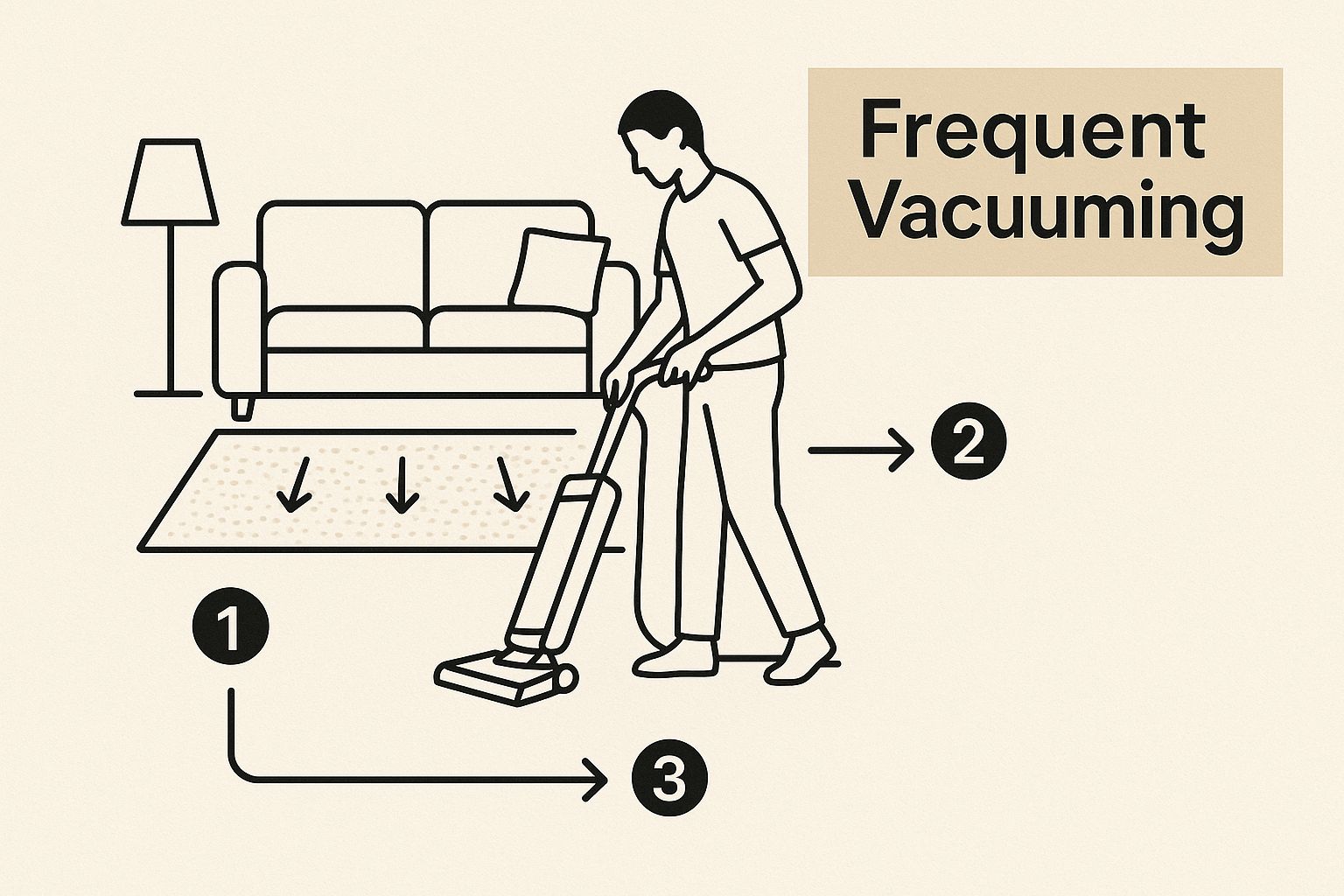
Of course, these methods work best with a solid foundation. Regular vacuuming is always your first and best defense, clearing away the surface dirt that causes smells in the first place.
The Vinegar and Water Solution
Another powerhouse from the pantry is white vinegar. A simple spray made from vinegar and water acts as a natural deodorizer, cutting through the alkaline odors that are often behind common household smells—especially pet accidents.
Pro Tip: Don’t let the initial vinegar smell worry you. It disappears completely as it dries, and as the acetic acid evaporates, it takes those other nasty odors right along with it.
Just mix equal parts white vinegar and water in a spray bottle. Give the carpet a light misting—the key is not to soak it. Too much moisture is a carpet’s enemy. Let the area air dry, and you’ll be left with a neutral, fresh scent. It’s perfect for those mystery smells that pop up in high-traffic zones.
DIY Carpet Freshener Recipes and Uses
This table provides a quick-reference guide to simple, effective homemade carpet freshening solutions for common household issues.
| Solution | Best For | How to Use |
|---|---|---|
| Baking Soda | General mustiness, pet odors, food smells | Sprinkle a generous layer, let sit for 30+ minutes, then vacuum thoroughly. |
| Vinegar + Water (1:1) | Pet accidents, mystery smells | Lightly mist the area with a spray bottle and allow it to air dry completely. |
| Baking Soda + Cornstarch | Oily or greasy spots | Mix equal parts, apply to the spot, let sit for an hour, then vacuum. |
| Baking Soda + Essential Oils | Adding a pleasant scent | Add 10-15 drops of pet-safe oil to 1 cup of baking soda before sprinkling. |
For those of us with furry family members, keeping on top of odors is a constant battle. If pet smells are your main challenge, our team has put together a fantastic pet-friendly home cleaning guide that’s full of specific tips to keep your space fresh.
Tackling Tough Stains and Persistent Odors
So, you’ve tried the baking soda and vinegar trick, but a stubborn odor is still hanging around. When you’re dealing with something like pet urine, musty mildew, or that mystery spill from last year, it’s time to bring out the heavy hitters.
These kinds of smells have a nasty habit of bonding with your carpet fibers on a molecular level. That’s why a simple surface clean won’t touch them. You don’t want to just mask the smell; you need to go after the source and eliminate it completely.
Why Enzymatic Cleaners Are a Game-Changer
When it comes to organic messes (think pet accidents, spilled food, or a knocked-over glass of milk), an enzymatic cleaner is your secret weapon. These aren’t your average soaps. They contain beneficial bacteria that produce enzymes programmed to dismantle specific organic molecules.
For example, the uric acid in pet urine is what creates that sharp, lingering smell. The enzymes in these cleaners are designed to break that very acid down, neutralizing the odor at its source.
Think of an enzymatic cleaner as a tiny demolition crew for stains. It specifically targets and dismantles the organic proteins causing the problem, breaking them into simple, harmless parts you can just wipe away. That’s why they actually eliminate smells instead of just covering them up.
These products have become increasingly popular because they are effective, biodegradable, and generally safer for families and pets than harsh chemical alternatives.
Making the Most of a Steam Cleaner
If your whole carpet feels a bit funky or it’s been a while since its last deep clean, renting a steam cleaner (also called a hot water extractor) is a fantastic weekend project. This method forces hot water and a cleaning solution deep into the carpet fibers, dislodging trapped dirt and killing the bacteria that cause odors.
But a common mistake can make things worse: using too much water. Soaking your carpet can backfire and create a perfect breeding ground for mildew.
Here’s how to get it right:
- Take Your Time: Move the machine slowly. The magic happens on the return pass, so give it plenty of time to suck up as much water as possible.
- Stick to the Script: Only use cleaning solutions made for hot water extractors. Adding more than the label recommends won’t make it cleaner—it will just leave behind a sticky residue.
- Get the Air Moving: Once you’re done, open the windows and set up some fans. A properly cleaned carpet should feel completely dry within 8 to 12 hours.
Dealing with rental equipment isn’t for everyone, and some spots are just plain tough. If you’re wrestling with a particularly nasty stain, our guide on how to remove stubborn stains offers more targeted advice.
Keep That Fresh Feeling: Simple Habits for Cleaner Carpets
Deep cleaning is fantastic for hitting the reset button, but the real secret to keeping your carpets consistently fresh is all about prevention. It’s about shifting from a reactive “uh-oh, it’s dirty” mindset to a proactive one that stops dirt and odors before they ever get a chance to settle in.
The best part? It doesn’t require a ton of effort. By weaving a few simple habits into your weekly routine, you’ll dramatically cut down on how often you need to haul out the heavy-duty cleaning gear.
Make Your Vacuum Work Smarter, Not Harder
Your vacuum is, without a doubt, the most important tool in your arsenal. Sticking to a consistent vacuuming schedule—once or twice a week for most households—is the single best thing you can do to stop dirt, dust, and pet dander from getting ground into the fibers where odors start.
But just running the vacuum over the open floor isn’t enough. To get a truly thorough clean, you have to get friendly with those attachments that came in the box.
- Crevice Tool: That long, skinny wand is your best friend for getting into the tight spots along baseboards and under the edges of furniture. You’d be amazed at what collects there.
- Upholstery Tool: Don’t let the name fool you. This wider attachment is perfect for carpeted stairs, which get a ton of concentrated foot traffic.
- Brush Attachment: The soft bristles are great for gently agitating and lifting dirt from delicate area rugs without being too aggressive.
Using these tools every time you vacuum ensures you’re pulling dirt out of every nook and cranny, not just the easy-to-reach spots.
Your Home’s First Line of Defense
Some of the most effective ways to keep carpets clean happen before anyone even steps on them. Think of your entryway as a crucial buffer zone that can drastically reduce the amount of dirt tracked through your house.
A good, sturdy doormat is non-negotiable. It’s the gatekeeper for your home, trapping an incredible amount of gunk that would otherwise end up embedded deep in your carpet.
Want to take it to the next level? Adopt a “no-shoes-inside” policy. For many families, this simple rule is a game-changer for carpet health and overall home hygiene. Just place a shoe rack or a designated basket by the door to make it a seamless and easy habit for everyone to follow.
These preventative habits are the foundation of how to freshen carpet and keep it that way. When you start thinking about home maintenance, understanding the difference between daily tidying and a true deep clean is key. We break it all down in our guide on deep cleaning vs. regular cleaning.
Knowing When to Call a Professional Cleaner
DIY tricks are great for day-to-day upkeep, but there comes a time when your carpet needs more than a surface-level fix. Recognizing when a bigger problem is brewing is the key to protecting your investment and keeping your home healthy.
If you’ve tried everything and that lingering odor or stubborn stain just won’t leave, it’s probably time to bring in the pros. Some issues are just too deep for household equipment to handle. A rental machine is a decent temporary solution, but it simply can’t match the suction power and high heat of a professional truck-mounted unit.
Signs You Need an Expert Touch
Knowing when to throw in the towel on DIY efforts can save you a lot of time, frustration, and even money down the road. Sometimes, calling an expert is the smartest move for preserving your carpet’s lifespan.
Here are a few tell-tale signs that it’s time to let a professional team take over:
-
Stubborn, Recurring Stains: Have you ever cleaned a spot, only to see it reappear a few days later? That’s usually caused by “wicking.” The stain is so deep in the carpet padding that as the top fibers dry, moisture pulls the soil back up to the surface. It’s a frustrating cycle that only a deep extraction can break.
-
Lingering Pet Odors: When you’re dealing with multiple pet accidents or a general pet smell that seems to have soaked into the entire room, you need more than a spray bottle. A professional hot water extraction is the only way to truly flush the odor source from deep within the carpet fibers and the backing beneath.
-
It’s Been Over a Year: Most major carpet manufacturers actually require a professional deep cleaning every 12–18 months to keep your warranty valid. More importantly, this removes the deep-seated, abrasive grit that even the best household vacuums can’t reach.
Think of professional cleaning as a necessary health check-up for your carpet. It’s not just about appearances; it’s about removing the allergens, bacteria, and pollutants that have settled deep into the fibers, creating a healthier living space for you and your family.
At NeatBee, our team uses techniques that are worlds apart from what a rental unit can do. We precisely control water temperature and pressure to kill bacteria and dislodge grime without oversaturating your carpet, which means a much faster and safer drying process.
Understanding the difference between your daily tidying and a true deep clean is crucial. For a closer look, you can explore our detailed comparison of deep cleaning vs. regular cleaning and see how a professional service can restore your home’s freshness.
Answering Your Top Carpet Freshening Questions
After years in this business, our team has heard just about every question you can imagine when it comes to keeping carpets fresh. People are often unsure about the best approach, so we’ve put together answers to the questions that pop up most often. Let’s clear up some of that confusion.
How Often Should I Really Be Freshening My Carpet?
Honestly, it really depends on what’s happening in your home.
For a simple refresh with something like baking soda, doing it once a month is a great baseline for the average household. But if you’ve got pets, kids, or your entryway carpet sees a ton of action, you’ll probably want to bump that up to every couple of weeks to keep odors from settling in.
Deep cleaning is a different beast entirely. We’re talking about a professional-grade wash, whether you rent a machine or hire a pro. This needs to happen every 12 to 18 months. That’s how you get rid of the deep-down grit and grime that a vacuum just can’t touch.
Here’s a pro tip from our team: If anyone in your home struggles with allergies or you have a few furry family members, don’t wait that long. A deep clean every 6 to 12 months is a much better schedule. It makes a huge difference in your indoor air quality by pulling out all the trapped dander and allergens.
Is It Better to Use a Wet or Dry Cleaning Method?
This is a classic question, and the answer isn’t black and white. Think of it as having different tools for different jobs.
- Dry Cleaning: Powders and foams are your go-to for a quick, surface-level fix. They’re fantastic for zapping surface odors and don’t require any drying time. Perfect for when you find out guests are coming over in an hour.
- Wet Cleaning: Hot water extraction, what most people call “steam cleaning,” is the undisputed champion of the deep clean. It’s the only method that truly flushes out the embedded dirt, bacteria, and allergens from the very base of the carpet fibers.
A word of caution if you’re going the DIY wet route: you absolutely must have good ventilation. Open the windows, run some fans. If that carpet isn’t bone dry within 24 hours, you risk creating a mildew problem, which is far worse than the original odor you were trying to fix.
Can I Use Essential Oils on My Carpet?
You can, but you have to be smart about it.
A few drops of a pet-safe essential oil (think lavender or chamomile) mixed into your baking soda can leave a lovely, natural scent behind. For more on what’s safe and what’s not in home cleaning, we often point people toward resources like the Environmental Working Group (EWG).
What you should never do is apply essential oils directly to the carpet. The oil itself creates a sticky residue that will become a magnet for dirt, leaving you with a dark, dingy spot. And please, always confirm an oil is non-toxic to your pets. Many common oils, including tea tree, citrus, and eucalyptus, can be dangerous for them.
Will Cleaning My Carpet More Often Make It Wear Out Faster?
This is one of the biggest myths in carpet care! It’s actually the complete opposite.
Think about it: the dirt, sand, and tiny particles that get tracked in are abrasive. Every time you walk across a dirty carpet, you’re grinding those sharp particles against the fibers, just like sandpaper. That’s what causes carpets to look flat, frayed, and worn out.
Regular, proper cleaning protects your investment and extends its life. By getting that abrasive grit out of there, you preserve the fibers and keep your carpet looking and feeling new for years longer.
When your own efforts just aren’t cutting it, that’s where we come in. NeatBee Cleaning offers professional deep cleaning that tackles the stains and odors that DIY methods leave behind, making your home a healthier, more welcoming place. Our team cares about every detail, ensuring your home feels as good as it looks.