Don’t panic! A rogue piece of chocolate landing on your favorite shirt or brand-new couch is a classic household emergency, but it’s one you can absolutely handle. The entire trick to winning the battle against a chocolate stain is to act fast and follow a few simple steps.
Your first move? Gently scrape off any excess chocolate. Then, get the fabric under a cold tap, rinsing the spot from the back to push the stain out, not in. This simple first response is your best shot at preventing the stain from setting, making the final cleanup so much easier for your busy family.
Why Acting Fast Is Your Best Defense
That moment of panic when chocolate meets fabric is universal. But what you do in those first few minutes can mean the difference between a temporary mishap and a permanent mark that ruins your day.
Chocolate stains are notoriously stubborn because they’re a complex mix of ingredients like fat, sugar, and protein. Each of these components needs a slightly different approach to break it down. And considering the global chocolate market was valued at over USD 130 billion in 2024, it’s no wonder these stains are a common headache in homes everywhere. You can learn more about the scale of the chocolate industry and why it’s a frequent cause of stubborn stains.
The goal isn’t to scrub furiously right away; it’s to contain the mess and stop it from embedding deeper into the fabric fibers.
The First Crucial Steps
Before you even think about reaching for a cleaning solution, your focus should be on these two immediate actions:
- Scrape Away the Excess: Grab a dull edge—the side of a spoon, a butter knife, or even a credit card works perfectly. Gently lift any solid chocolate off the surface. This is key to preventing yourself from accidentally smearing the chocolate further into the material.
- Rinse with Cold Water: Now, turn the garment inside out and run cold water through the back of the stain. This simple trick helps flush the chocolate particles out of the fibers instead of pushing them deeper. Whatever you do, never use hot water at this stage. Heat can essentially “cook” the protein in the chocolate, setting the stain for good.
Here’s a quick reference table to keep in mind for that critical “oops” moment.
For those curious about effective methods, here’s a straightforward guide on how to remove chocolate stains from various fabrics.
Immediate Chocolate Stain Do’s and Don’ts
| Action | Why It’s Important |
|---|---|
| DO scrape off solid chocolate immediately. | Prevents the stain from spreading and setting. |
| DON’T rub or scrub the stain. | Pushes the chocolate deeper into the fabric fibers. |
| DO rinse with cold water from the back. | Flushes the stain out of the fabric effectively. |
| DON’T use hot water. | Can set the protein in the stain, making it permanent. |
| DO act as quickly as possible. | The sooner you treat it, the easier it is to remove. |
| DON’T throw it in the dryer until the stain is gone. | Heat from the dryer will permanently set any remaining stain. |
Following these initial steps gives you the best possible chance of getting that stain out completely.
This infographic breaks down the basic process for how to remove chocolate stains effectively.
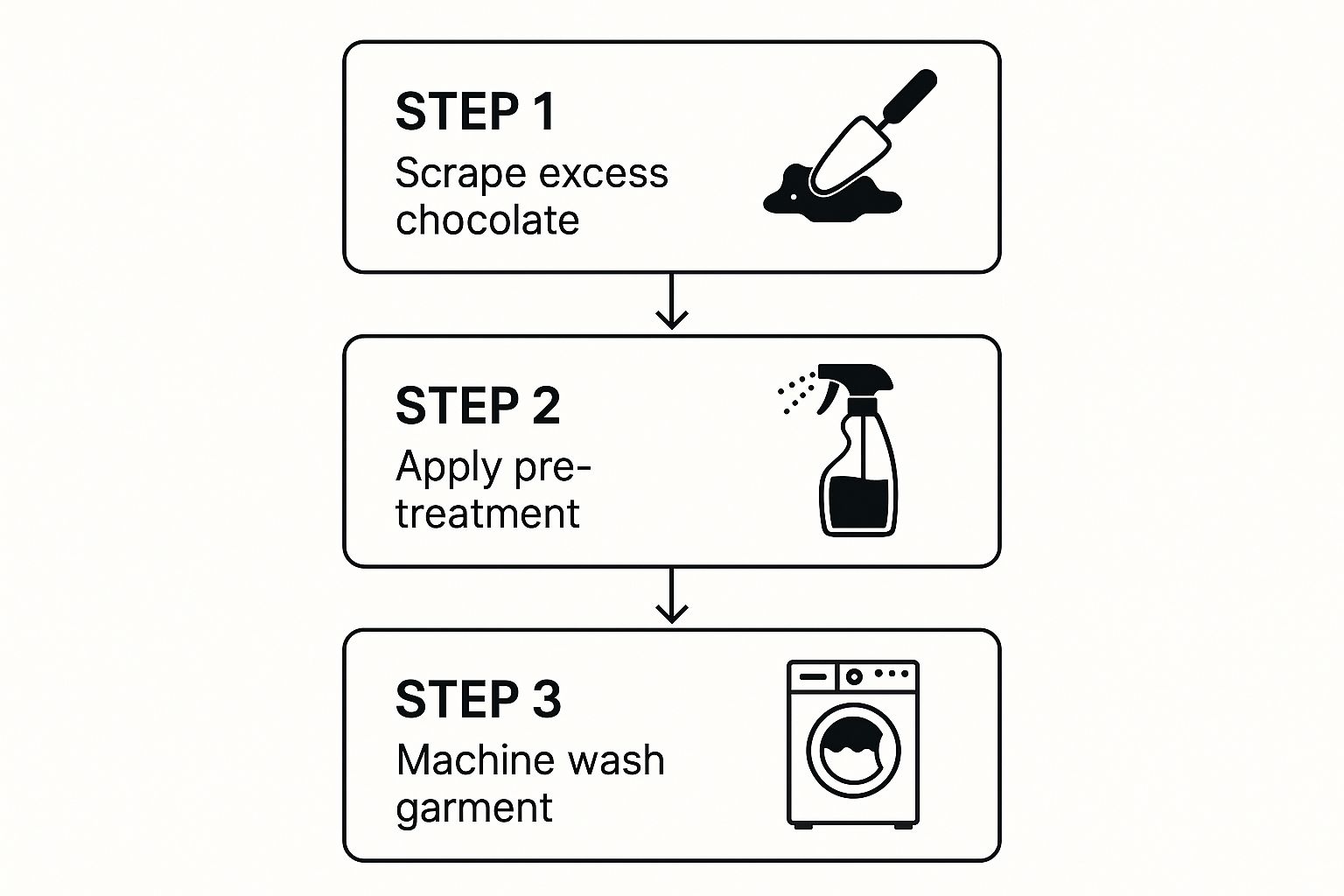
As you can see, a successful removal starts with these simple, manual steps long before the washing machine gets involved.
How to Remove Chocolate Stains from Washable Clothes
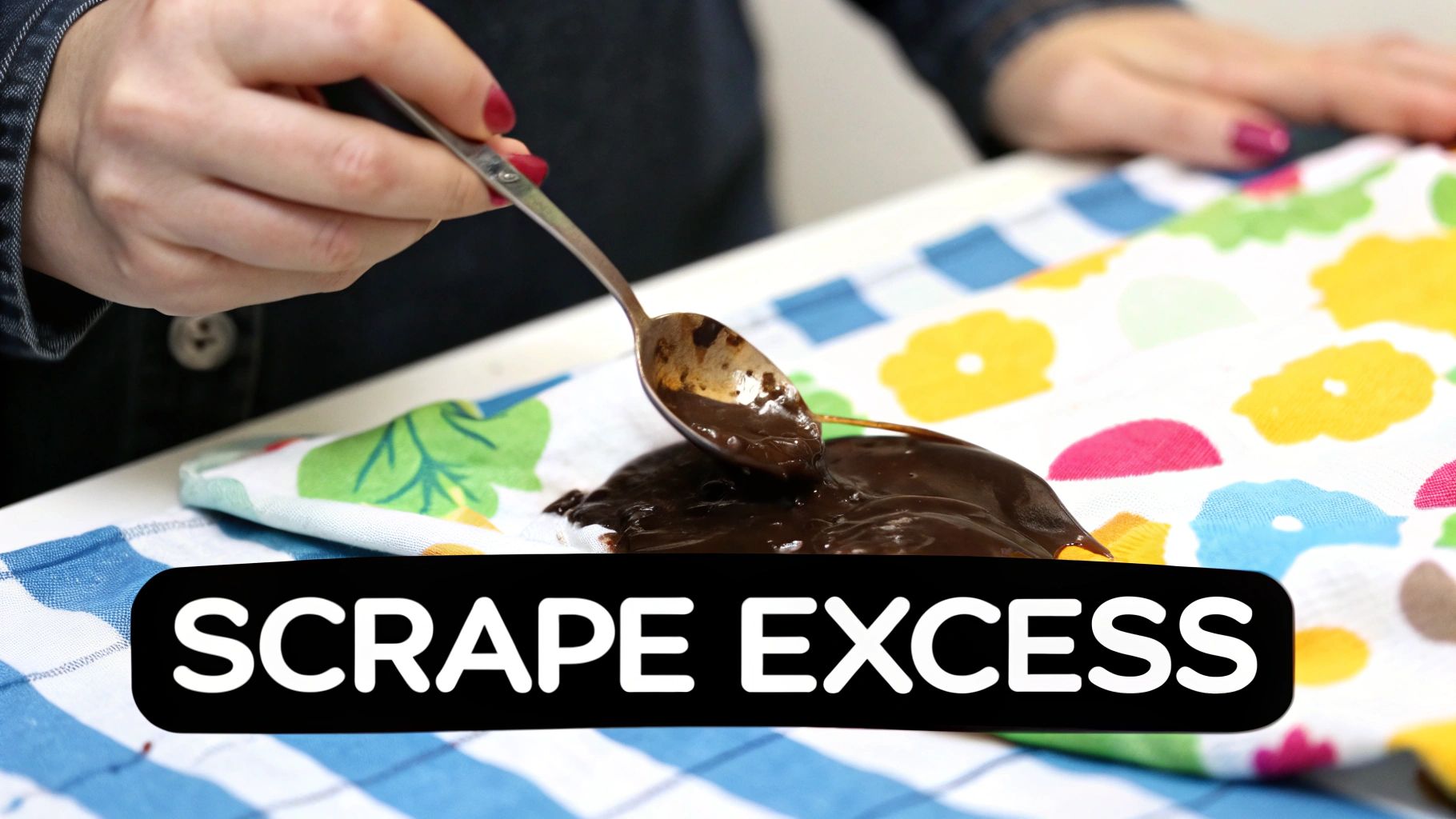
It’s a classic laundry nightmare: your favorite shirt has a run-in with a chocolate bar. But don’t despair. For washable fabrics like cotton, linen, and most synthetics, you have an excellent shot at getting it out completely. The trick is to act fast and use the right approach.
You can’t just toss it in the wash and hope for the best. The single most important part of how to remove chocolate stains from clothing is the pretreatment. This step is non-negotiable for breaking down that stubborn mix of oils and sugars before it ever sees the inside of your machine.
The Power of a Good Pretreatment
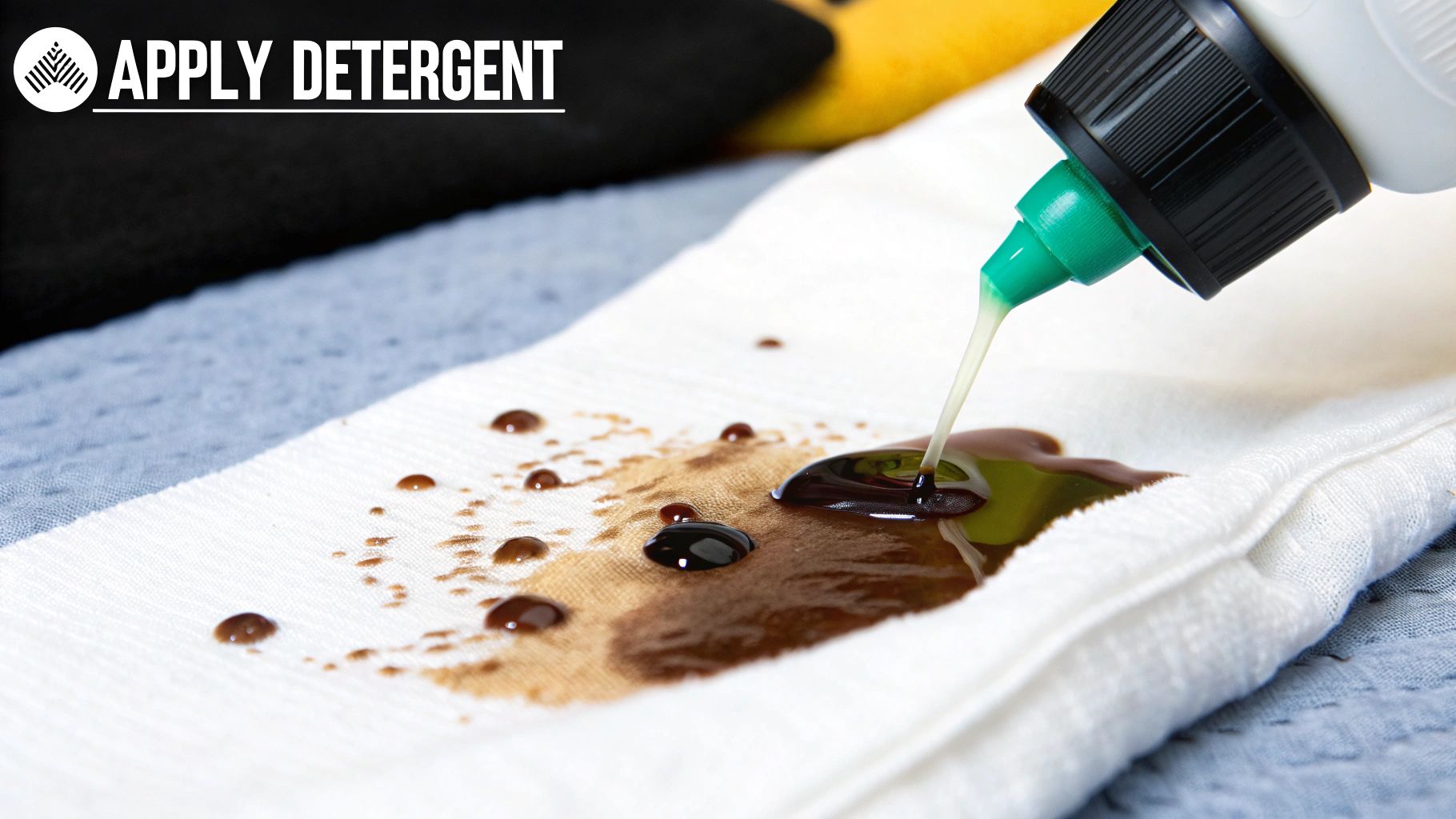
Think of pretreating as giving your detergent a serious head start. By applying a high-quality liquid laundry detergent or a dedicated stain remover directly to the spot, you let its enzymes and surfactants get to work immediately. These ingredients are specifically designed to dissolve the fats and lift the tannins that make chocolate such a tricky stain.
For the best results, here’s the method our team at NeatBee recommends:
- Dab a small amount of liquid detergent right onto the stain.
- Gently work it into the fabric with your fingers or a soft-bristled brush—an old toothbrush works wonders.
- Let it sit for at least 5–10 minutes, but don’t let it dry out.
This little bit of patience really pays off. It gives the cleaner enough time to penetrate the fibers and loosen the stain’s grip. For a really stubborn spot, we sometimes suggest soaking it in cold water for about 30 minutes after applying the detergent. It’s like the difference between a quick wipe-down and a truly thorough scrub, which you can read more about in our guide comparing deep cleaning vs. regular cleaning.
The Right Way to Wash and Dry
After you’ve pretreated the stain, it’s time for the washing machine. Always, always use cold water for the wash cycle. As we’ve covered, hot water is the enemy here—it can cook the protein in the chocolate, setting the stain permanently.
Crucial Tip: Before you even think about putting the garment in the dryer, inspect it closely after the wash cycle. If you can still see even a faint trace of the stain, keep it out of the dryer. The heat will lock it in for good.
If a shadow of the stain remains, don’t worry. Just repeat the pretreatment and washing steps. It might take a second try, but this persistence is what will save your favorite clothes. Once you’re certain the stain is completely gone, you can dry the item as you normally would.
Lifting Chocolate Stains from Carpet and Rugs
A dropped brownie or a rogue splash of hot cocoa doesn’t have to spell disaster for your carpet. Our first piece of advice is always the same: don’t panic and grab the harshest chemical you can find. A simple, gentle DIY approach is often the most effective way to rescue your floors without risking damage.
The real key to success is acting before the stain has a chance to work its way deep into the carpet fibers.
Your Go-To DIY Carpet Cleaning Solution
For fresh chocolate spills, you can whip up a surprisingly powerful cleaning solution with a couple of things you already have in your kitchen. This mixture is gentle enough for most carpet types but tough on the oils and tannins in chocolate.
Here’s what our team does:
- Mix it up: Combine one tablespoon of clear dish soap and one tablespoon of white vinegar in two cups of warm water. Give it a gentle stir—you want it mixed, not bubbly.
- Apply and blot: Dip a clean, white cloth into the solution and gently blot the stain. Always start from the outside edge and work your way in to prevent spreading it further.
- Whatever you do, don’t scrub! Scrubbing is the fastest way to push the chocolate deeper and damage your carpet’s texture.
- Rinse carefully: Once the stain is gone, grab a new cloth, dampen it with plain cold water, and blot the area again. This “rinses” the soap mixture out, which is a crucial step to prevent a sticky residue that will just attract more dirt down the line.
- Dry it out: Finally, place a clean, dry towel or a stack of paper towels over the damp spot. Press down firmly—we often place a heavy book on top—to soak up as much moisture as possible.
When to Bring in a Commercial Cleaner
What if your DIY solution doesn’t quite do the trick, or you’re up against an older, more stubborn stain? That’s when it’s time to consider a commercial carpet cleaner. It’s no surprise the global stain remover market was valued at around $24.98 billion in 2024; we all need a little extra help sometimes! You can find more details about the growing stain remover market on Straits Research.
Our pro tip? Look for an enzyme-based cleaner. These formulas are specifically designed to break down the proteins and fats found in chocolate, which makes them incredibly effective.
No matter what cleaner you choose, always do a spot test on a hidden area of your carpet first, like inside a closet or under the sofa. You need to be sure it won’t cause any discoloration. And for particularly delicate or expensive rugs, calling in a professional is always the safest bet. Our team at NeatBee is always ready to step in with expert home cleaning services.
A Gentle Approach to Upholstery Stains
Chocolate on the sofa calls for a much more delicate touch than a stain on your favorite t-shirt. You can’t just toss your furniture in the wash, so strategy is everything here. When you’re tackling a chocolate stain on a couch or armchair, the goal is to protect your investment while getting the mark out for good.
First things first: find the fabric care tag. This little label is your roadmap, telling you exactly which cleaning methods are safe for your specific upholstery.
Cracking the Upholstery Cleaning Codes
You’ll almost certainly see a letter code on the tag. Knowing what these mean is absolutely crucial before you put any kind of cleaner on the fabric.
- W: This means you’re good to go with water-based cleaning solutions.
- S: This one is a bit trickier. It stands for “solvent,” meaning you should only use a solvent-based, water-free cleaner.
- S/W: This code gives you flexibility. You can safely use either a water-based or a solvent-based cleaner.
- X: This is the most delicate of all. It means you should only vacuum or brush the fabric lightly—no liquids of any kind.
Once you’ve identified your fabric’s code, you can move forward with confidence. This knowledge is fundamental to keeping your furniture looking great, which we dive into deeper in our complete couch cleaning guide.
The Blot and Lift Technique
For any fabric that’s safe for liquid cleaners (W or S/W), the “blot and lift” method will be your best friend. The idea is to remove the chocolate without soaking the fabric, which can lead to ugly water rings or even damage the cushion filling underneath.
Start by mixing up a gentle cleaning solution that’s right for your fabric type. Grab a clean, white cloth and dab a small amount of the solution onto the stain.
Blot gently, never scrub. Seriously, scrubbing will only push the stain deeper into the fibers. Work from the outside edge of the stain inward to keep it from spreading.
Our Pro Tip: After you’ve blotted with the cleaning solution, use a separate cloth dampened with plain cold water to “rinse” the area by blotting it again. This helps pull out any leftover soap residue. To finish, press a dry, clean towel firmly onto the spot to soak up as much moisture as possible. This final step is key to protecting your upholstery from water damage.
Tackling Old and Set-In Chocolate Stains
![Image](https://cdn.outrank.so/df76034b-43c4-4821-8d19-220514992ee1/368e277f-9622-4bb0-9501-d4b4d6fe6d83.jpg
We’ve all been there. You’re sorting laundry and find a mysterious, week-old chocolate stain on one of the kids’ shirts. Don’t toss it just yet! While old, set-in chocolate stains are definitely a tougher challenge, they aren’t a lost cause.
Once a fresh stain has dried and bonded to the fabric, your everyday detergent might not cut it. You need to bring in the heavy hitters. This is where enzyme-based cleaners become your secret weapon. These formulas are specifically designed to break down the stubborn proteins and fats in chocolate that other cleaners leave behind.
Pro-Level Techniques for Stubborn Stains
For light-colored or white fabrics, a bit of hydrogen peroxide can work wonders. But you absolutely have to do a spot test first—no exceptions.
Here’s the safe way to do it:
- Find a hidden spot, like an inside seam, and apply a single drop.
- Give it a few minutes to make sure there’s no discoloration.
- If you’re in the clear, dab a small amount onto the stain. Let it bubble up, then rinse it out completely.
Another pro-tip our NeatBee team loves is to use a handheld steamer. Gently steaming the area before you apply a cleaner can help rehydrate and loosen that old stain. This simple step makes it much more receptive to whatever treatment you use next.
The global demand for effective, yet safe, stain removers is on the rise. This is especially true in commercial settings like hotels, where chocolate stains are a daily headache. Consumers are also pushing for more organic and eco-friendly options, which is driving some exciting industry innovation. You can learn more about the stain remover market on TechSci Research.
These more advanced methods are often exactly what you need to rescue an item you thought was ruined for good. For more expert advice, check out our complete guide on how to remove stubborn stains from all around your home.
Common Chocolate Stain Questions Answered
Even with the best guide, some stains just make you scratch your head. We get a lot of questions from our clients about those tricky “what if” scenarios that always seem to pop up with chocolate. Here are our quick-and-dirty answers to help you tackle any chocolate catastrophe with confidence.
Does Vinegar Remove Chocolate?
It sure can! White vinegar is a fantastic ally in the fight against chocolate stains. Its mild acidity is perfect for breaking down the tannins that give chocolate its color.
Just mix up a simple solution of one part vinegar to one part water. Dab it onto the stain, let it sit for about 10 minutes to work its magic, and then rinse it out completely before tossing the item in the wash. It’s a great, eco-friendly way to pretreat a stain.
Is It Better to Let a Chocolate Stain Dry?
That’s a great question, and the answer is almost always no. When you’re dealing with chocolate on clothes or your couch, you want to act fast and treat it while it’s still fresh.
But there’s one big exception to this rule: carpet. If you’ve got a glob of melted chocolate on your rug, letting it dry completely can actually make it easier to handle. Once it’s hard, you can often vacuum up the solid bits before you start treating the spot. This little trick helps you avoid accidentally smearing the chocolate deeper into the carpet fibers.
NeatBee Pro Tip: For a gooey, melted mess on your clothes, grab an ice cube and hold it over the spot for a minute. The cold will harden the chocolate, making it a breeze to scrape off the excess without spreading it around.
Can Milk Remove Chocolate Stains?
This one sounds like an old wives’ tale, but believe it or not, it sometimes works! The enzymes in milk can help break down the proteins and fats in a chocolate stain.
If you want to give it a try, just soak the stained area in milk for about 15–30 minutes. After it’s had some time to soak, rinse it out thoroughly and wash it like you normally would. It’s an old-school trick that can be surprisingly effective in a pinch.
Feeling like you’re fighting a losing battle with stubborn spots? The NeatBee Cleaning team has seen it all and cleaned it all. Knowing how to remove chocolate stains is just one part of keeping your home feeling fresh and comfortable. Let us bring our Care in Every Detail to your home so you can relax. Book your cleaning today