That funky, sour smell wafting up from your kitchen sink isn’t just annoying—it’s a sign that your garbage disposal is long overdue for a deep clean. If you’ve ever found yourself thinking, “my garbage disposal smells,” you’re not alone. As home cleaning experts, our team at NeatBee has seen it all, and this is one of the most common issues we help families tackle. Thankfully, it’s also a pretty easy one to fix.
The short answer? Trapped food particles and grease are having a party in there, and the bacteria they invite are causing all the trouble.
Getting to the Bottom of That Awful Sink Smell
Understanding Why My Garbage Disposal Smells
Let’s be real, that distinct odor is more than just a nuisance. It’s a clear signal that food scraps and grime are building up inside your disposal. Pinpointing the cause is the first real step to getting rid of the stink for good.
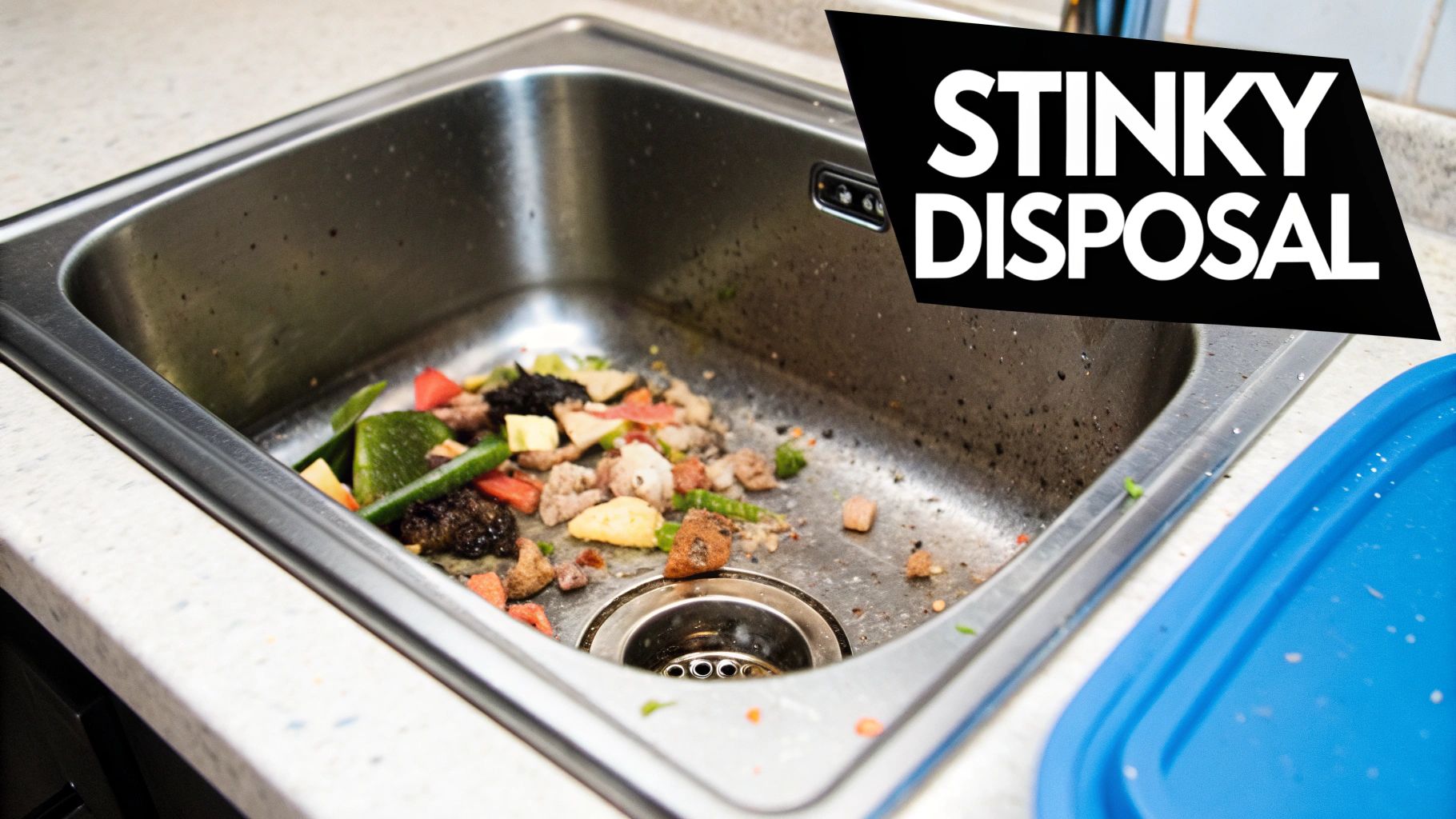
At its heart, the issue comes down to decomposing gunk. Every time you flip that switch, tiny bits of food can get stuck in the grinding chamber, on the blades, or—the most common culprit—underneath the black rubber splash guard.
The Main Culprits Behind the Odor
When those little particles hang around, they start to rot and release some seriously unpleasant gases. Pouring grease or oil down the drain only makes things worse, creating a sticky film that traps even more food debris. It’s the perfect breeding ground for smelly bacteria.
To get a clearer picture, here’s a quick rundown of what’s likely going on in there.
Common Causes of Garbage Disposal Odors
| Cause | What’s Happening | Typical Smell |
|---|---|---|
| Trapped Food Particles | Tiny bits of produce, meat, or grains are stuck in crevices and are actively decomposing. | Sour, rotten, or like old garbage. |
| Grease & Fat Buildup | Poured fats and oils solidify, coating the disposal’s interior and trapping other food scraps. | Rancid, oily, and stale. |
| Bacteria & Mold Growth | The dark, damp environment is a perfect home for mold and odor-causing bacteria to thrive. | Musty, mildewy, or earthy. |
As you can see, it’s usually a combination of things working together to create that signature stench.
In fact, some estimates suggest that over 50% of household garbage disposals start to smell within their first two years if they aren’t cleaned regularly. This just goes to show how widespread the issue is and why a little maintenance goes a long way. You can dig into garbage disposal market trends if you’re curious about the data.
By figuring out what’s causing the smell, you can stop just masking it with air fresheners and start applying a real, lasting solution. This is the foundation for the cleaning methods we’re about to jump into next.
A Practical Cleaning Routine for a Fresher Disposal
So, you’ve figured out why your garbage disposal smells funky. Now it’s time to roll up your sleeves and get that thing back to its clean, non-offensive state. This isn’t just a quick rinse—think of it as a total reset for your kitchen sink using simple stuff you probably already have.
First things first: safety. Before you do anything, kill the power to the disposal. You can usually find the plug under the sink, or just flip the right breaker in your electrical panel. Whatever you do, never, ever stick your hand down the drain.
Mechanical Scrubbing with Ice and Salt
Your first move is to knock loose all the gunk that’s stubbornly clinging to the grinding chamber. An ice and salt slurry is perfect for this—it’s like a power-scrub without the harsh chemicals.
- Start by dumping about two cups of ice cubes straight into the disposal.
- Follow that with one cup of coarse salt. Rock salt or kosher salt works best because the big crystals add more grit.
- Turn on the cold water, then flip the disposal switch. Let it run until you no longer hear the ice crunching and grinding away.
This simple trick scours the blades and impeller plates, breaking off those dried-on food bits that are causing the smell. The cold water is key here; it helps solidify any grease, making it easier for the ice to chip it off.
Dissolving Grease with a Fizzing Reaction
With the big stuff gone, it’s time to deal with the greasy film and sanitize the unit. For this, nothing beats the classic combo of baking soda and vinegar. It’s a super effective, all-natural method and a cornerstone of our guide on making a DIY garbage disposal cleaner.
This handy visual breaks down the process for getting rid of those nasty odors.
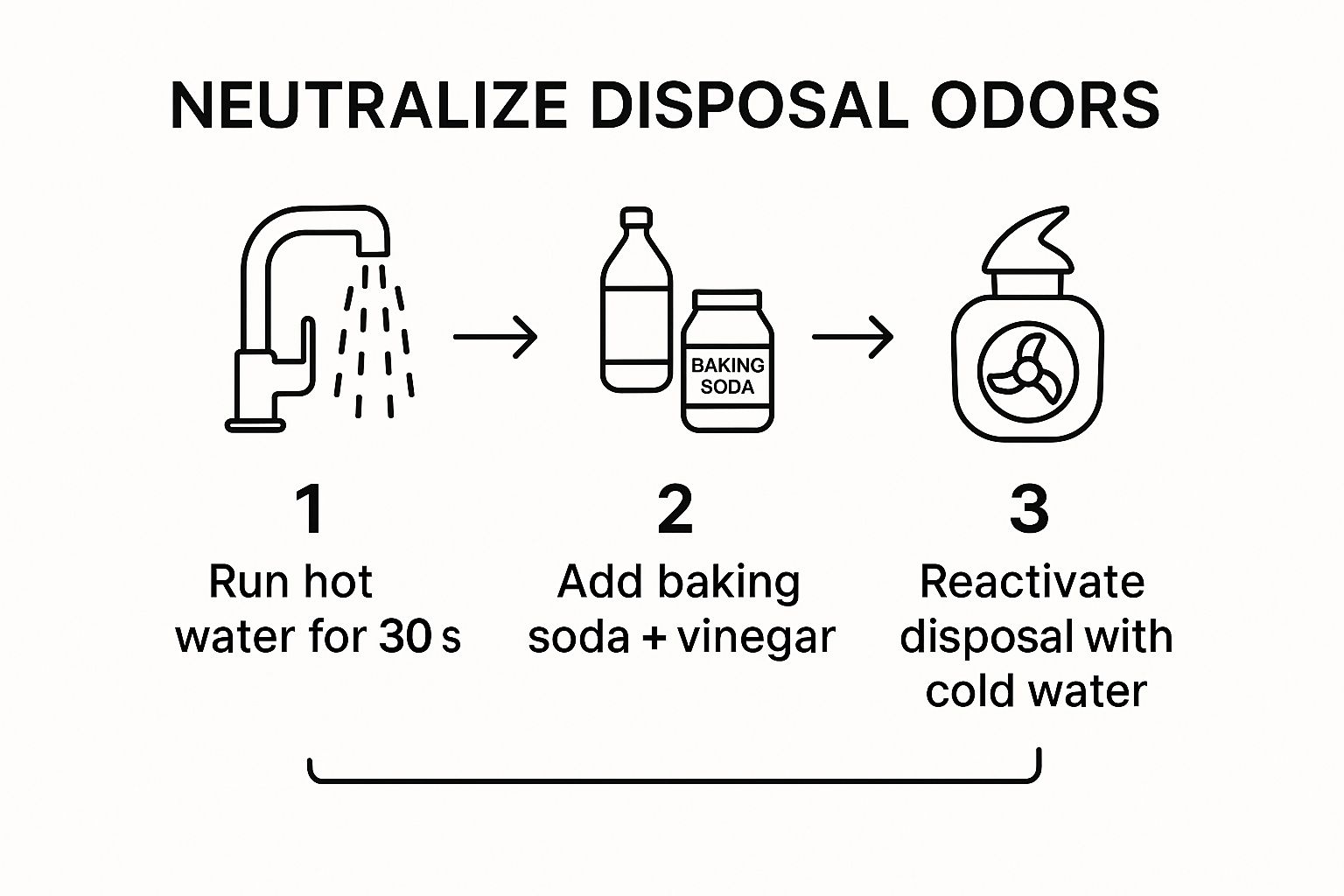
As you can see, it’s a straightforward, three-part process that gets right to the root of the problem.
Pour about a half-cup of baking soda down the drain, then chase it with one cup of white vinegar. You’ll get that satisfying fizzing reaction immediately. Pop the sink stopper in to trap all that foam down inside the disposal where it can do its job. Give it about 15 minutes to work its magic.
That fizzing isn’t just for show. The chemical reaction actively breaks down grease and neutralizes the acidic compounds causing those sour smells, leaving the unit sanitized from the inside out.
The Final Flush and Deodorizing Finish
Once the fizzing has died down, pull the stopper and flush everything out with very hot water for a good minute or so. This will wash away all the grime and residue you just loosened up.
For the final touch, give your kitchen a fresh, clean scent by grinding up some citrus peels. The rinds from a lemon, lime, or orange are perfect. Just chop them into small pieces, toss them in, and run the disposal with cold water. The natural oils in the peels are a fantastic deodorizer and the perfect signal that your disposal is officially clean.
Choosing Your Cleaner: Natural vs. Chemical Solutions
When your garbage disposal starts to smell, your first instinct is probably to grab a cleaner and get to work. But what should you use? The cleaning aisle is full of powerful chemical solutions, while your own pantry likely holds some surprisingly effective natural alternatives.
The choice often comes down to balancing raw cleaning power with safety and environmental impact.
Natural cleaners like baking soda, vinegar, and citrus peels are fantastic for routine maintenance. They’re cheap, safe for most plumbing and septic systems, and you probably already have them on hand. These pantry staples work by either physically scrubbing away grime or using mild acids to neutralize odors and dissolve light buildup. For a deeper dive into green cleaning, check out our guide on eco-friendly cleaning products.
The Power of Natural Cleaners
Don’t underestimate these simple solutions—regularly using natural methods is highly effective. In fact, simple maintenance like grinding citrus peels or using a baking soda and vinegar flush can slash odors by up to 70%. This is a big deal when you consider that over 40% of homes in North America have a garbage disposal, making weird sink smells a super common problem.
When to Consider Chemical Cleaners
On the other hand, sometimes you need to bring in the big guns. Commercial chemical cleaners are specifically formulated for tougher jobs. If you’re dealing with a severe, persistent odor that just won’t quit or you suspect a stubborn clog caused by heavy grease, a chemical cleaner might be the right call.
These products contain powerful enzymes or caustic agents designed to dissolve organic gunk quickly and efficiently. Just be sure to use them carefully and always follow the manufacturer’s instructions to the letter.
Key Takeaway: For regular weekly or bi-weekly cleaning, natural solutions are gentle, effective, and safe. Reserve the stronger chemical cleaners for those stubborn, occasional problems that your DIY methods just can’t seem to fix.
Ultimately, the best approach is a balanced one. Use natural methods for consistent upkeep to prevent major buildup in the first place. That way, you can avoid relying on harsh chemicals and keep your disposal—and your whole kitchen—smelling fresh day in and day out.
Simple Habits to Keep Odors from Coming Back
While a deep clean works wonders, the real secret to stopping that awful funk from returning is to build a few small habits into your daily kitchen routine. It’s always easier to prevent a problem than to fix one, especially when the source is forgotten food buildup deep inside your disposal.
By adopting a few simple practices, you can stop food particles and grease from ever getting comfortable in the first place. This transforms your disposal from a potential source of odors into the reliable kitchen workhorse it’s meant to be.
The Dos of Daily Disposal Use
Think of these as the golden rules for keeping things fresh and functional. They’re quick, easy, and incredibly effective at preventing the gunk that causes those bad smells to creep back.
-
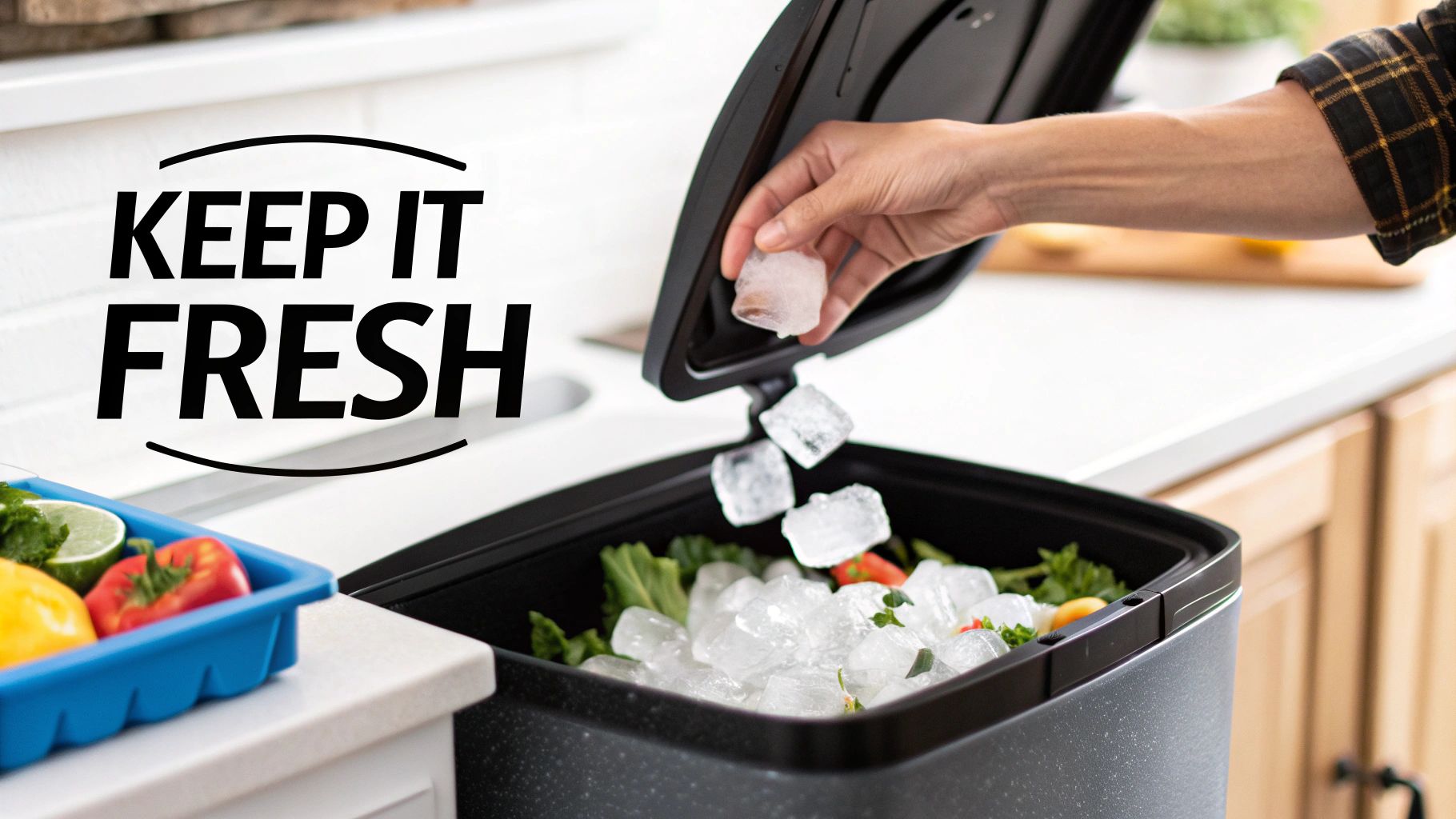
Always Use Cold Water: Before you even think about flipping the switch, get a strong stream of cold water running. Keep it going the entire time you’re grinding and for at least 20-30 seconds after you turn the disposal off. Hot water might seem like a good idea, but it liquefies grease, allowing it to coat your pipes further down. Cold water keeps fats solid so the disposal blades can chop them up and flush them away properly.
-
Cut Food into Small Pieces: Don’t just jam large scraps down the drain and hope for the best. Feeding the unit smaller, more manageable pieces allows it to work way more efficiently. This ensures everything gets ground up and washed away completely, leaving no problematic chunks behind to rot.
What Not to Put Down Your Disposal
Just as important as knowing what to do is knowing what not to do. So many common kitchen scraps are notorious for causing clogs, creating foul odors, and even damaging the unit itself. By avoiding them, you’re not just preventing smells—you’re protecting your plumbing.
A surprising number of persistent odor problems are linked directly to what goes down the drain. Surveys show that nearly 30% of users report recurring smells simply because they’re grinding up the wrong things. You can learn more about the data behind garbage disposal issues.
Avoid these items like the plague:
-
Grease, Oil, and Fats: These are public enemy number one. They coat the blades and the inside of the grinding chamber, creating a sticky trap that catches every other food particle that comes along.
-
Coffee Grounds: This is a huge myth. People think they deodorize, but in reality, they just accumulate in your pipes and create dense, sludgy clogs that smell awful.
-
Fibrous Vegetables: Think celery stalks, onion skins, and corn husks. Their long, stringy fibers can wrap around the blades like hair in a vacuum cleaner, jamming the motor.
-
Expandable Foods: Pasta, rice, and bread are like sponges. They soak up water and swell, creating thick, paste-like blockages that are a nightmare to clear.
-
Bones and Fruit Pits: Most residential disposals just aren’t built for this. Hard items like chicken bones or avocado pits will just rattle around, dull the blades, and potentially damage the motor.
Knowing When to Call a Plumbing Professional
Look, most funky garbage disposal smells are just a sign you need a good, deep clean. It’s usually just trapped food particles causing a stink. But every once in a while, a persistent odor is your disposal’s way of crying for help. A stubborn, foul smell can be a major red flag for a deeper issue that no amount of DIY scrubbing can fix.
Knowing the difference can save you from a much bigger, messier, and more expensive headache down the road.
So, you’ve given it the works. You followed all the cleaning steps, and it seemed fine for a day or two, but that nasty smell is already creeping back. If that’s the case, listen up. This usually means the problem isn’t actually in the disposal chamber itself but has moved further down the line into your plumbing—like the P-trap or even the main drain.
Signs You Need an Expert
It’s time to put away the ice cubes and citrus peels and pick up the phone when you notice symptoms that go beyond just a bad smell. Ignoring these can lead to serious plumbing damage, a busted disposal, or worse, a kitchen flood.
Keep an eye (and an ear) out for these clear indicators:
- Loud or Strange Noises: Is your disposal making a racket? A constant, loud humming could mean the motor is jammed or on its last legs. Grinding or metallic rattling sounds often signal something hard—like a piece of silverware or broken glass—is trapped inside, which can absolutely destroy the blades.
- Frequent Clogging: If your sink is constantly backing up even when you’re careful about what you put down there, you’re likely dealing with a major blockage in the drainpipes that home remedies just won’t touch.
- Persistent Leaks: Any water dripping from the bottom of the disposal unit is a serious problem. This is often a sign of a failed internal seal, and unfortunately, that usually means the entire unit needs to be replaced.
- No Power at All: If your disposal is completely dead and you’ve already tried hitting the little red reset button on the bottom, the issue could be faulty wiring or a burned-out motor.
Don’t try to be a hero with these problems. A professional plumber has the tools and experience to quickly diagnose the real issue, whether it’s a failing motor or a nasty, deep-set clog in your plumbing system.
While our team at NeatBee is all about keeping your home sparkling, some jobs just need a plumber’s touch. For more answers to common cleaning questions, check out our FAQ page.
Got More Questions About Garbage Disposal Smells?
Even after a good cleaning, you might still have a few questions. Let’s tackle some of the most common ones to keep that funky smell from ever coming back.
How Often Should I Really Be Cleaning It?
A quick run of citrus peels is great for a weekly refresh, but you’ll want to do a deeper clean with baking soda and vinegar at least once a month. Think of it as preventative maintenance—it stops that slimy gunk from building up in the first place.
Is It Safe to Use Bleach in My Garbage Disposal?
Our team would advise against using bleach. It’s a harsh chemical that can damage the rubber and metal parts inside your disposal over time. It’s also not the best thing for your plumbing or septic system. There are much safer and equally effective ways to get the job done.
For more answers to your cleaning questions, check out our complete NeatBee FAQ page.
At NeatBee Cleaning, our team believes that a clean, fresh-smelling home is a happy home, and that care in every detail matters. If my garbage disposal smells is just one of many tasks on your to-do list, let our team lend a hand. We’re here to help your home feel clean, safe, and comfortable. Book your cleaning today and let us handle the rest.