Non-toxic cleaning solutions are your secret weapon for a sparkling home, minus all the harsh chemicals. We’re talking about simple, powerhouse ingredients you probably already have, like vinegar, baking soda, and a few essential oils. These non toxic cleaning solutions will help you create a healthier environment.
With these DIY recipes, you can tackle everyday grime and germs effectively without exposing your family to anything nasty. It’s all about creating a healthier space, one clean countertop at a time.
Why Your Home Needs Non-Toxic Cleaning Solutions
Ever glance at the warning labels on your store-bought cleaners and feel a little uneasy? Many of those common products are loaded with volatile organic compounds (VOCs), which can linger in the air long after you’ve put the cap back on. These chemicals are known culprits for poor indoor air quality and can be a real problem for loved ones, potentially triggering everything from allergies and asthma to headaches.
Switching to non-toxic cleaning solutions is so much more than a trendy choice—it’s a conscious decision for a healthier home. This is especially true if you have little ones, curious pets, or anyone with chemical sensitivities. You get the peace of mind that comes with knowing the surfaces your kids and pets are constantly touching are free from sketchy residues and filled with non toxic cleaning solutions.
The Perks Go Way Beyond Health
Once you make the switch, you’ll wonder why you didn’t do it sooner. You’re not just cleaning your house; you’re embracing a more mindful, sustainable, and budget-friendly way of living.
- Protect Your Crew: Say goodbye to harsh chemicals that can irritate skin, eyes, and lungs. Your family and furry friends will thank you.
- Breathe Easier: Natural ingredients don’t release funky fumes. Your home will smell genuinely fresh, not like a chemical factory.
- Seriously Save Money: Ingredients like vinegar and baking soda are incredibly cheap and can do the job of a dozen different specialized products. Our guide to the best natural cleaning products will get you started without breaking the bank.
- Be Kinder to the Planet: DIY solutions are biodegradable, and you’ll drastically cut down on plastic waste by reusing your own spray bottles.
This isn’t just a niche trend. The worldwide demand for natural household cleaners is on track to nearly double, hitting an estimated USD 13.28 billion by 2030. Why the surge? People are waking up to the risks. Some eye-opening research even suggests that using certain conventional cleaners can be as damaging to your lungs as smoking 20 cigarettes a day. You can dig into the rise of natural cleaners at GrandViewResearch.com.
This is why incorporating non toxic cleaning solutions into your routine is essential for both safety and effectiveness.
At the end of the day, you shouldn’t have to choose between a powerful clean and a safe home. By leaning into these simple, effective non-toxic cleaning solutions recipes, you can get that sparkling space you want while truly looking out for your family’s well-being.
Your DIY Non-Toxic Cleaning Toolkit
Before we jump into the recipes, let’s get you familiar with the key players. These are the budget-friendly, multi-purpose ingredients that will form the backbone of your new cleaning arsenal. This quick-glance table introduces the essential ingredients for your homemade cleaners, outlining their main function and what surfaces they work best on.
| Ingredient | Primary Use | Best For | Safety Note |
|---|---|---|---|
| White Vinegar | Disinfectant & Degreaser | Glass, countertops, floors | Never mix with bleach (toxic gas!) or use on natural stone like marble. |
| Baking Soda | Mild Abrasive & Deodorizer | Sinks, tubs, ovens, drains | Can be slightly abrasive, so test on a hidden spot on delicate surfaces first. |
| Castile Soap | Gentle All-Purpose Cleaner | Floors, dishes, countertops | A little goes a long way! Dilute it properly to avoid leaving a residue. |
| Rubbing Alcohol | Disinfectant & Solvent | Glass, mirrors, electronics | Highly flammable. Use in a well-ventilated area and keep away from heat. |
| Essential Oils | Scent & Antimicrobial Boost | All-purpose sprays, laundry | Use high-quality, pure oils. Some can be irritating to pets, especially cats. |
| Hydrogen Peroxide | Stain Remover & Disinfectant | Grout, stained laundry, toilets | Light-sensitive, so keep it in its original dark bottle. Can bleach fabrics. |
With these simple ingredients, you’re officially ready to mix up cleaners that are safe, effective, and tailored to your home’s needs. Let’s get started.
Mastering Your First All-Purpose Cleaner
If you’re ready to dip your toes into the world of non-toxic cleaning solutions, making your own all-purpose cleaner is the perfect place to start. It’s incredibly easy, works surprisingly well, and will quickly become the workhorse of your cleaning caddy. Forget needing a dozen different bottles under the sink—this simple spray can handle most of the everyday messes that life throws at you.
This recipe uses basic ingredients you probably have in your pantry right now. It just goes to show you don’t need complicated formulas or harsh chemicals to get a powerful, streak-free shine on common surfaces around your home.
The Classic Vinegar All-Purpose Spray
This recipe is a timeless classic for a reason—it just plain works. The acetic acid in vinegar is a natural disinfectant and a fantastic degreaser, making it perfect for cutting through grime on countertops, sinks, and even windows.
Here’s what you’ll need to get started:
- 1 part white vinegar: This is your cleaning powerhouse.
- 1 part distilled or filtered water: Using distilled water helps prevent mineral spots, which is a lifesaver if you have hard water.
- 10-15 drops of essential oil (optional): This is your secret weapon to mask the vinegar smell and even add extra cleaning power.
- A glass spray bottle: Essential oils can break down plastic over time, so glass is a much safer and more durable choice for the long run.
Putting it together couldn’t be simpler. Just combine the vinegar and water in your spray bottle, add your favorite essential oils, and give it a gentle shake. You’re ready to go!
Our team loves this simple recipe because it’s a fantastic, low-cost alternative to store-bought cleaners. If you’re looking for more ways to make your home sparkle naturally, check out some of our professional cleaning tips for your home.
Customizing Your Cleaner
One of the best parts of going the DIY route is personalizing the scent. While the vinegar aroma fades as it dries, adding essential oils makes the whole cleaning experience much more pleasant. You can even tailor the oils to the job at hand.
Here are a few of our favorite combinations:
- For the Kitchen: Go with lemon or orange essential oil. Their natural degreasing properties give your spray an extra boost against kitchen grease and leave behind that fresh, citrusy scent we all love.
- For a Calming Clean: Try lavender or eucalyptus oil. These are perfect for wiping down bedroom surfaces or for a cleaning session that feels more like a relaxing ritual.
- For an Antimicrobial Kick: Add tea tree oil. It’s well-known for its natural antibacterial properties, making it a great addition for cleaning bathrooms or other high-touch areas.
Important Safety Tip: While this vinegar-based solution is incredibly versatile, its acidity can damage certain surfaces. Never use vinegar on natural stone like marble, granite, or limestone, as it can cause permanent etching and dull the finish. It’s also best to avoid using it on waxed wood surfaces or unsealed grout.
This simple, customizable cleaner is your first big step toward a healthier, non-toxic home. It’s proof that effective cleaning doesn’t require harsh chemicals—just a few smart ingredients and a little bit of know-how.
Tackling Tough Kitchen Messes Naturally
The kitchen is the heart of the home, which means it’s also ground zero for some of the gnarliest messes. From splattered grease on the stovetop to that baked-on grime in the oven you’ve been ignoring, it’s tempting to reach for the harshest chemical cleaner you can find. But you can get that same deep-clean satisfaction using powerful, non-toxic alternatives that are much safer for your family.
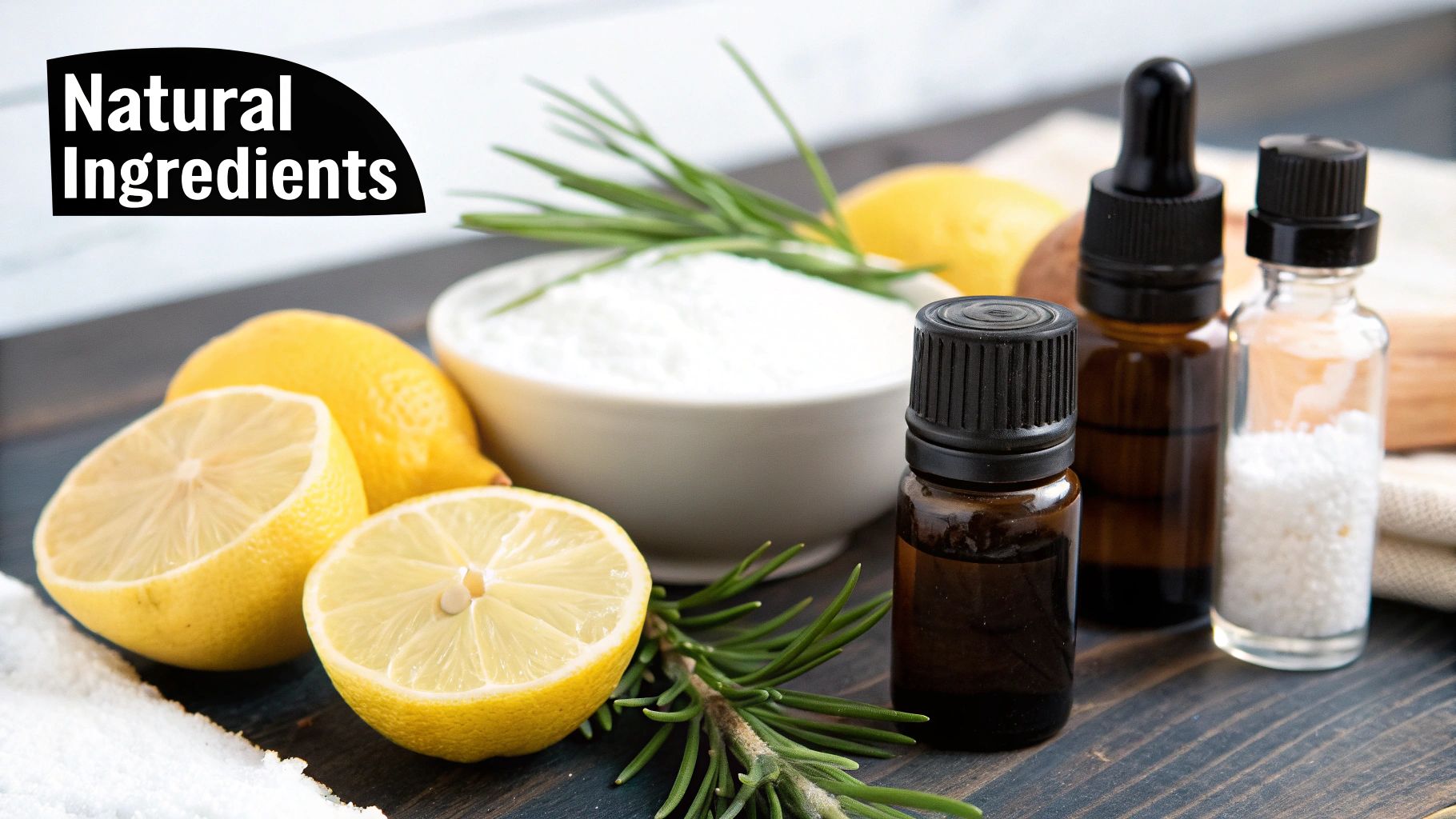
With just a few simple ingredients from your pantry, you can whip up targeted non-toxic cleaning solutions that cut through the worst kitchen messes without flooding your home with harsh fumes.
Your Go-To Degreasing Spray
Grease has a knack for getting everywhere—the backsplash, your cabinet doors, the range hood. Instead of a chemical degreaser, a simple Castile soap spray works wonders. Castile soap is a plant-based powerhouse that’s incredibly effective at breaking down oils.
Here’s our team’s favorite, super-simple recipe:
- In a glass spray bottle, mix 2 cups of warm distilled water with 2 tablespoons of liquid Castile soap.
- Add 10–15 drops of lemon essential oil. Lemon not only smells fantastic, but its natural acidity gives it an extra edge against grease.
- Shake it all up gently to combine.
Just spray this solution directly onto greasy surfaces, let it sit for a minute to work its magic, and wipe it all away with a damp microfiber cloth. It’s shockingly easy and effective.
The Ultimate Scrubbing Paste For Sinks And Cookware
For those stubborn, stuck-on food stains on your sinks, pots, and pans, you need a little abrasive power. This is where a simple baking soda paste becomes your best friend. It’s gentle enough not to scratch most surfaces but tough enough to lift away discoloration and caked-on food.
Just mix baking soda with a small amount of water until you have a thick, spreadable paste. Slather it onto the stained area, let it sit for about 15 minutes, then give it a gentle scrub with a sponge or brush before rinsing it all away. For an extra boost on stainless steel, you can add a little cream of tartar to the mix.
Today’s consumers are increasingly seeking out gentler, health-conscious cleaning formulas. This shift has driven innovation toward multifunctional products made with natural ingredients, which are often derived from plant sources and carry a lower risk of causing allergies.
Conquering The Oven Without Harsh Fumes
Let’s be honest, cleaning the oven is a chore everyone dreads, mostly because of the intense chemical fumes from commercial oven cleaners. The good news? You can get a sparkling clean oven using that same baking soda paste—it just takes a bit of patience.
First, make your paste by mixing about 1/2 cup of baking soda with 3 tablespoons of water.
Next, spread the paste all over the interior surfaces of your cold oven, making sure to avoid the heating elements. Now for the easy part: let it sit overnight, or for at least 12 hours. The paste does all the hard work for you.
The next day, use a damp cloth to wipe out as much of the dried paste as you can. You’ll see the grime lift right off. For any stubborn spots left behind, spritz them with white vinegar. The vinegar will react with the baking soda, causing it to foam up and loosen the last of the residue.
Finally, give the oven one last wipe-down with a clean, damp cloth. No harsh chemicals, no choking fumes, just a spotless oven. And while you’re at it, don’t forget the microwave! We have a complete guide on how to clean a dirty microwave using similar natural methods.
Creating a Sparkling Bathroom Without Harsh Fumes
The bathroom often feels like the one room where you need heavy-duty chemicals to fight soap scum, mold, and mildew. But you can get a truly deep clean and a sparkling finish without the harsh fumes that leave you coughing. These simple, potent non-toxic cleaning solutions work wonders.
Preventing buildup is half the battle, especially in the shower. A quick daily spray can stop soap scum and mildew from ever getting a foothold, which means you’ll be scrubbing far less often.
Your Daily Shower Maintenance Spray
This is a two-minute recipe that is perfect for keeping the shower fresh between deep cleans. The vinegar is brilliant at dissolving mineral deposits from hard water, while tea tree oil gives it a natural antimicrobial boost to keep mold and mildew at bay.
- In a glass spray bottle, combine one part white vinegar with one part distilled water.
- Add 10-15 drops of tea tree essential oil. You can also add a few drops of lavender or eucalyptus for a more spa-like scent.
- Shake it gently before you use it.
Right after your shower, just mist this solution over the tiles, grout, and glass door. You don’t even need to rinse or wipe it down—just spray and walk away. It’s a tiny habit that makes a huge difference.
A Powerful Tub and Tile Scrub
For those times you need a deeper clean, you’ll need something with a bit more grit. This simple paste cuts right through tough soap scum and grime on tubs, tiles, and sinks without scratching the surfaces.
To make it, mix 1/2 cup of baking soda with just enough liquid Castile soap to form a thick, frosting-like paste. Add 5 drops of lemon essential oil for its amazing degreasing power and fresh scent.
Just apply the paste with a sponge or scrub brush, let it sit for about 10-15 minutes, then scrub in a circular motion and rinse it all away. For extra stubborn grout stains, an old toothbrush is the perfect tool to really work the paste in.
“Switching to DIY bathroom cleaners was a game-changer. My asthma used to flare up every time I cleaned the tub. Now, I use a baking soda scrub and can breathe easily—plus, it works even better than the harsh stuff I used before!”
The image below breaks down just how effective, affordable, and quick these DIY cleaners are compared to each other.
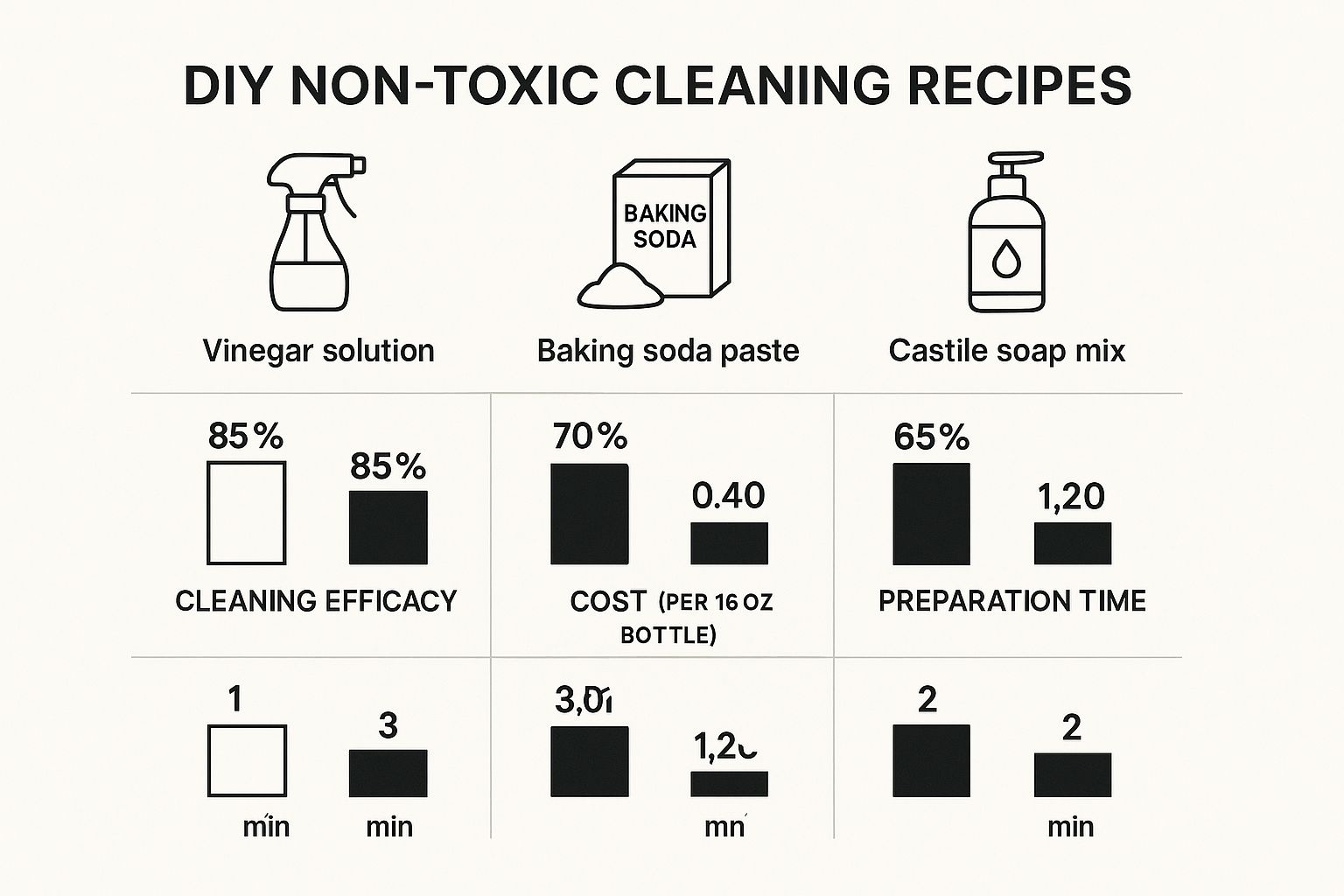
As you can see, these natural solutions aren’t just highly effective—they’re also incredibly cost-efficient and quick to whip up. When you’re dealing with common household messes, it helps to know which solution works best for each problem.
Your Go-To Guide for Common Cleaning Problems
This quick-reference table matches the mess with the perfect DIY cleaner.
| Common Problem | Best DIY Solution | Key Ingredients | Prep Time |
|---|---|---|---|
| Soap Scum Buildup | Tub and Tile Scrub | Baking Soda, Castile Soap | 5 minutes |
| Hard Water Stains | Daily Shower Spray | White Vinegar, Water | 2 minutes |
| Grimy Grout | Tub and Tile Scrub | Baking Soda, Castile Soap | 5 minutes |
| Mildew Prevention | Daily Shower Spray | Tea Tree Oil, Vinegar | 2 minutes |
This table should make it easy to grab exactly what you need without a second thought.
The Easiest Toilet Bowl Cleaner
Trust us, cleaning the toilet doesn’t require bleach. For routine cleaning, just pour about 1/4 cup of baking soda into the bowl, followed by 1 cup of white vinegar.
Let the mixture fizz for about 15 minutes. This reaction helps loosen grime and deodorizes the bowl naturally. Once it settles, give it a quick scrub with a toilet brush and flush. It’s a simple, fume-free way to keep your toilet sparkling. At NeatBee, we believe a healthy home is a happy home, and our house cleaning services always prioritize your family’s well-being with eco-friendly options.
Safe and Gentle Cleaners for Floors and Fabrics
When it comes to cleaning large areas like your floors or delicate surfaces like your favorite armchair, you absolutely need a gentle touch. The goal is a solution that’s tough on dirt but completely safe for your family, pets, and the materials themselves. Thankfully, creating your own non-toxic cleaning solutions for these jobs is surprisingly simple and incredibly effective.
This shift toward gentler products isn’t just a personal choice; it’s part of a huge movement. The green cleaning market is projected to hit USD 15 billion by 2025, a boom driven by families who want safer, biodegradable options in their homes. With over 60% of customers now saying they prefer eco-friendly cleaning services, the demand for healthier homes is clear. You can dig deeper into these cleaning industry trends at MaidProfit.com.
A Gentle Solution For Your Floors
Your floors see it all, from muddy paws to toddler spills. The right cleaner depends entirely on what your floor is made of, because a one-size-fits-all approach can easily cause damage.
- For Tile, Vinyl, or Linoleum: A simple mix of one part white vinegar to ten parts warm water in your mop bucket is perfect. The vinegar disinfects and cuts right through grime without leaving that sticky residue cheap cleaners often do.
- For Sealed Hardwood or Laminate: Hold off on the vinegar—it’s too acidic for wood. Instead, a few drops of pH-neutral Castile soap in a gallon of warm water does the trick. Just be sure to wring your mop until it’s barely damp to prevent any water damage.
Pro Tip: We can’t stress this enough: always do a patch test. Before you go mopping an entire floor with a new DIY solution, test it in a small, hidden spot—like inside a closet or under the sofa—to make sure it doesn’t cause any discoloration or damage.
Reviving Your Fabrics and Carpets
Let’s be honest, commercial upholstery cleaners and fabric refreshers are notorious for their overpowering fragrances and harsh chemicals. They can be a nightmare for sensitive skin and noses. Fortunately, homemade alternatives work beautifully to lift stains and knock out odors.
When those inevitable spills happen, like coffee or juice, acting fast is everything. For a lot of common household messes, a simple, effective stain remover can be a lifesaver. We cover exactly how to deal with specific spots in our guide on how to remove stubborn stains.
A Simple Carpet and Fabric Deodorizer
You don’t need an aerosol can to freshen up carpets, rugs, and upholstered furniture. Baking soda is a natural powerhouse and an incredibly effective deodorizer that absorbs unwanted smells instead of just masking them with synthetic perfumes.
Just sprinkle a generous layer of baking soda over the entire surface of your carpet or couch cushions. Let it sit for at least 30 minutes, though for really stubborn odors, giving it a few hours is even better. This gives it time to really work its magic and absorb those smells.
Once it’s done its job, vacuum it all up thoroughly. If you want to add a subtle, natural fragrance, mix 10-15 drops of your favorite essential oil (like lavender or lemon) into the baking soda before you sprinkle it. It leaves your home smelling genuinely fresh and clean, creating a welcoming and healthy space for everyone.
Common Questions About Non-Toxic Cleaning
Making the switch to homemade, non-toxic cleaners is a huge win for your home and family, but it’s totally normal to have a few questions before you start mixing. One of the biggest concerns we hear is whether these simple recipes can actually hold a candle to the heavy-duty stuff you buy at the store. Let’s clear the air and tackle some of the most common questions to help you feel confident and excited about this journey.
Are DIY Solutions As Effective As Store-Bought Cleaners?
Yes, they absolutely are! They just work a little differently. The real secret is matching the right natural ingredient to the right kind of mess.
Think of it this way: vinegar’s natural acidity is incredible at cutting through grease and disinfecting surfaces. At the same time, baking soda acts as a gentle but mighty abrasive, perfect for scrubbing away stubborn buildup without scratching. For about 95% of the everyday messes you’ll face, these simple non-toxic cleaning solutions are more than up to the task—and so much safer for your family.
How Long Do Homemade Cleaners Last?
This all comes down to how you store them. A basic vinegar-and-water spray is incredibly stable and can last for months without any problems. Simple and effective.
However, once you start adding water to recipes without a strong natural preservative (like high-proof alcohol), you’ll want to make them in smaller batches. As a rule of thumb, we recommend using these water-based solutions within one to two weeks to make sure they stay fresh and potent.
A pro tip we always share: store your homemade cleaners in clearly labeled glass spray bottles. Keep them out of direct sunlight, which can break down essential oils and weaken their cleaning power over time. It’s a small step that makes a big difference.
Are These Solutions Safe For Every Surface?
Even though the ingredients are natural, they’re not a one-size-fits-all solution. Knowing what not to clean is just as important as knowing what to clean.
The number one rule we follow is to never use acidic cleaners like vinegar or lemon juice on natural stone. This is non-negotiable for surfaces like:
- Marble
- Granite
- Limestone
- Travertine
The acid will permanently etch the surface, leaving it dull and damaged. If you’re ever the slightest bit unsure, just do a quick spot test on a hidden area first. When in doubt, test it out!
Feeling inspired but a little short on time? The NeatBee Cleaning team is here to help. We use eco-friendly products to give your home a sparkling clean that’s safe for the whole family. Book your cleaning today!